


October 27, 2026
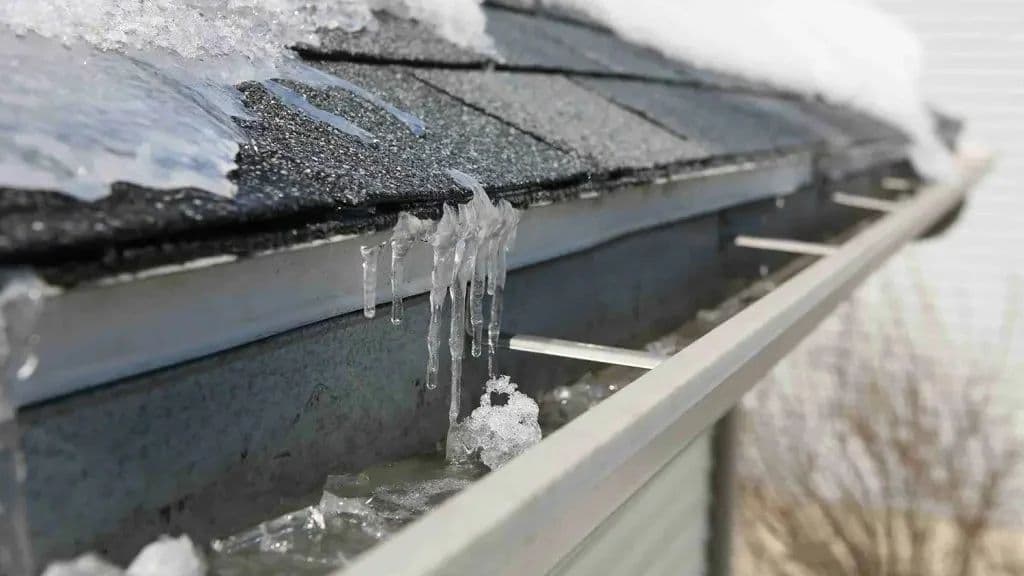
Clean gutters help water drain, but they cannot prevent ice dams. For your North Jersey home, schedule gutter cleaning and downspout clearing before winter, and have a qualified contractor check attic air leaks, insulation, and ventilation if ice dams return.
Ice dams form when roof snow melts and refreezes at colder eaves, even when outdoor temperatures stay below 32°F. Gutter maintenance services, including gutter guards, can’t stop that cycle.
Your winter plan:
Gutters manage runoff; attic repairs address escaping heat.
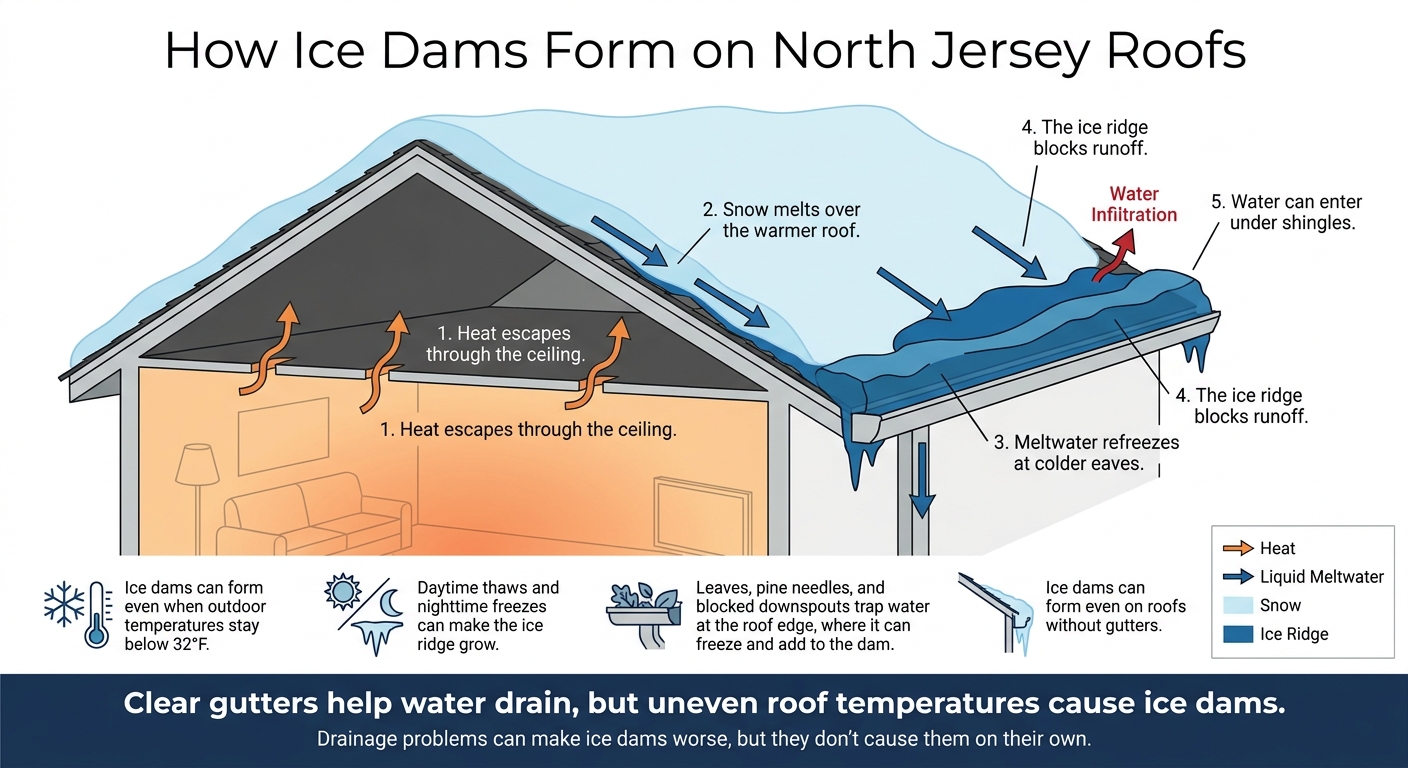
How Ice Dams Form on North Jersey Roofs
Clear gutters help water drain, but uneven roof temperatures cause ice dams. That’s why gutter cleaning alone won’t stop them.
Heat escaping through the ceiling warms the roof deck, melting the snow above it. The eaves stay colder because they extend beyond the home’s warm interior.
When meltwater reaches those cold eaves, it refreezes into a ridge. That ridge blocks runoff and forces water under the shingles. Water can then reach the roof structure and leak into the home.
North Jersey’s repeated daytime thaws and nighttime freezes can make the ice ridge grow. Heat from the attic can also keep melting snow even when outdoor temperatures stay below freezing.
Leaves, pine needles, and blocked downspouts trap water at the roof edge, where it can freeze and add to the dam. But ice dams can form even on roofs without gutters. Clearing debris helps drainage; it doesn’t fix uneven roof temperatures. Drainage problems can make ice dams worse, but they don’t cause them on their own.
| Measure | Role | Limitation | Appropriate Trade |
|---|---|---|---|
| Clean gutters | Remove drainage blockages | Do not control roof heat | Gutter professional |
| Attic insulation and air sealing | Reduce heat escaping to the roof | Do not clear gutters | Insulation/weatherization contractor |
| Attic ventilation | Release trapped warm air | Cannot replace air sealing or insulation | Roofing contractor |
Gutters handle drainage; attic work addresses the heat source. If ice dams keep returning after gutters are cleared, attic heat - not a need for more drainage work - is the likely issue.
Schedule gutter cleaning in late fall, after the leaves drop. Clear the downspouts, too: even a clean gutter cannot drain through a blocked outlet. If ice still forms, an attic inspection is the next step.
If ice dams return despite clear gutters, ask a roofing or insulation contractor to check for air leaks and assess insulation and ventilation. The inspection should include areas around attic hatches, recessed lights, and chimneys.
Uneven roof snowmelt, ceiling stains, or musty odors after a thaw also call for an attic and roof check for damp insulation and leaks.
Gutter guards reduce debris, but they do not stop attic heat loss. Snow and ice can still cover them, so gutter guards do not prevent ice dams.
Once gutters are clear, turn to the roof and attic conditions that can lead to ice dams.
Schedule professional gutter and downspout cleaning in late fall, after most leaves have fallen. Check for sagging gutters and sections pulling away from the fascia. Make sure downspout extensions direct water away from the foundation, and remove leaves from ground-level drainage paths.
If ice dams keep coming back, schedule an attic evaluation before winter to check air sealing, insulation, and ventilation.
With drainage paths open, use a long-handled roof rake from the ground to remove snow from the lower roof. Take care not to scrape shingles or catch gutters. Roof raking reduces snow load, but it won't remove an existing ice dam.
Never climb onto a snowy or icy roof or use a ladder in cold, windy, or wet weather. Leave steep or heavily iced areas to qualified professionals.
During thaws, watch for leaks without putting yourself or the roof at risk. Look for thick ice along the eaves, loose gutters, and interior drips. Check attic insulation only where you can see it safely, and keep ground-level drainage paths clear.
Never pull icicles, disturb frozen gutters, or chip ice with an axe, shovel, or other metal tool. These actions can crack shingles and damage flashing. If water gets inside, move belongings, catch drips, photograph the damage, and contact a qualified roofing or ice-dam-removal professional.
Clean gutters help meltwater drain, but they don’t stop attic heat from melting roof snow. Prevention starts with drainage, followed by snow removal and attic fixes.
Use a roof rake from the ground to reduce snow at the eaves. Never chip away ice. If an ice dam has formed, leave removal to professionals, and have a qualified roofing or attic specialist check air sealing, insulation, and ventilation.
Gutter guards keep debris out, and they have no effect on ice dams. The FAQ in our gutter guard installation guide explains why attic heat is the cause.
For routine maintenance, schedule professional gutter cleaning after the last leaf drop and before the first snow. Treat cleaning and attic fixes as separate jobs. Gutter Boys clears leaves and debris to prevent clogs and overflow, while air sealing, insulation, and ventilation belong to an attic or roofing specialist.
Water stains on ceilings or interior walls are often the first sign of roof damage from ice dams. When meltwater backs up, it can seep under shingles, damage insulation and walls, and eventually lead to mold. Outside, heavy ice may pull gutters away from the house.
If you think water is entering your home, contact a professional to remove the ice safely. Do not chip at the ice.
Cleaning gutters during a winter thaw won’t prevent ice dams. Remove debris before the first winter snow so meltwater can drain.
Ice dams mainly form when heat escaping from the attic melts snow on the roof. That water then refreezes at the colder eaves. Clogged gutters can make ice dams worse, but clean gutters won’t stop attic heat loss.
Never chip away ice - it can damage shingles. Instead, use a roof rake from the ground to remove snow.
Ask the inspector to check for attic heat leaks around access doors, pull-down stairs, recessed lights, vent fans, and openings around chimneys or ducts.
Have them check insulation coverage and depth, especially above exterior walls and rooms with bathroom fans. They should also verify that air flows from the soffit intake vents to the ridge exhaust.
Ask whether the roof deck stays close to the outdoor temperature. Heat escaping into the attic can melt snow on the roof, which then refreezes at the colder eaves.

