


November 24, 2026
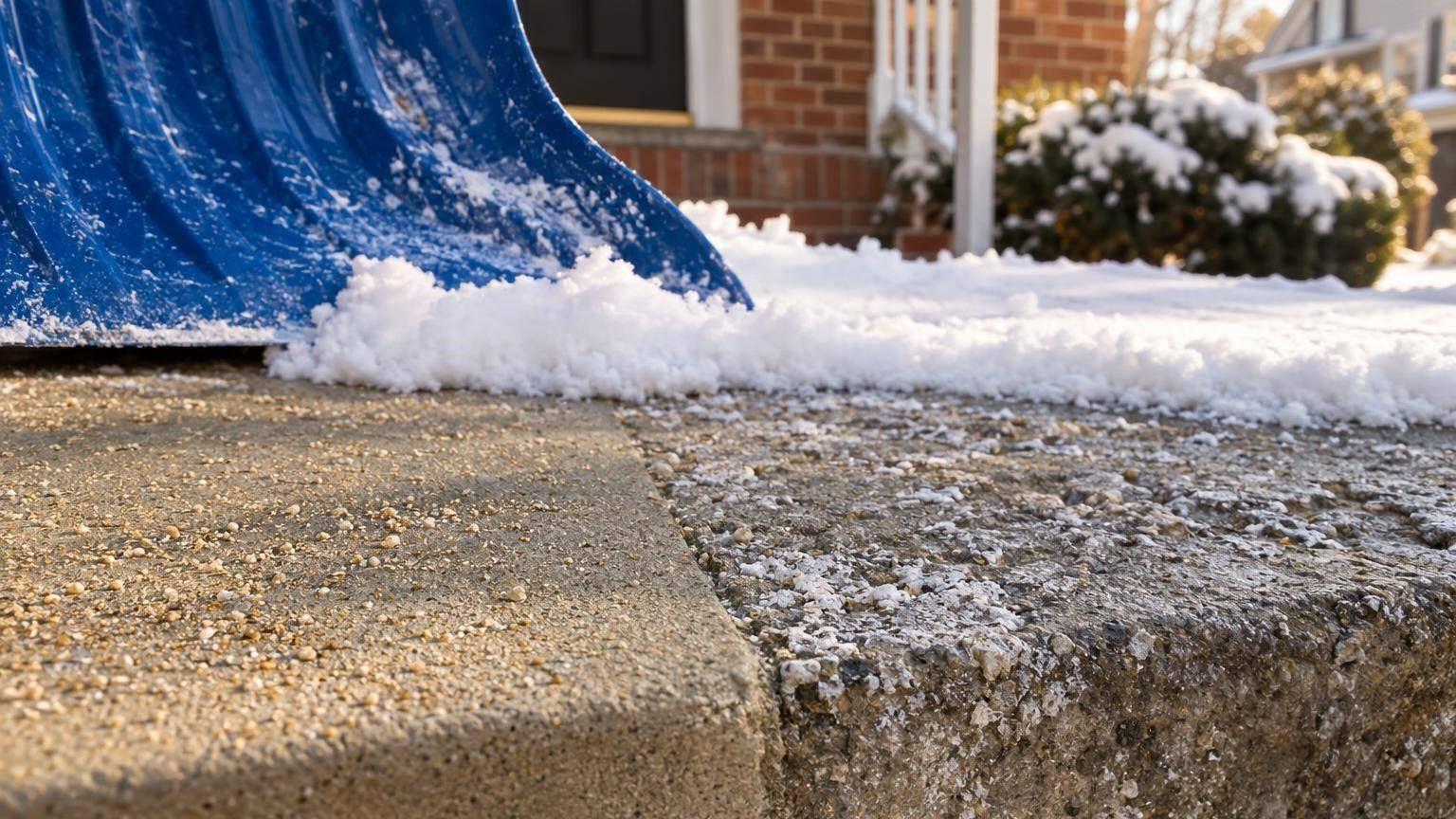
To help prevent flaking concrete, shovel snow early, limit deicers, and remove salty slush before it refreezes. For new steps facing their first winter, use sand for traction instead of deicing chemicals.
Salt, trapped moisture, and repeated freezing can damage the surface, and poor drainage makes it worse. Once freezing weather has passed, clean sound concrete with a neutral cleaner and a nylon brush on a dry day around 40°F or warmer, with time for rinse water to dry before nightfall.
Cleaning removes salt residue and leaves damage untouched. If steps are already flaking, chipped, or losing material, have a concrete contractor assess them before further washing. For routine cleanup of sound concrete after winter, a pressure washing service in North Jersey can do the work.

Protect Concrete Steps From Road Salt Damage
North Jersey winters can leave concrete flaking and worn.
Concrete spalling is surface flaking or scaling. Salt keeps the surface wet longer. When water inside the slab freezes, it expands. Repeated freeze-thaw cycles can lift the top layer. Damage tends to build where salt and meltwater linger.
Check stair edges, joints, low spots, walkway transitions, and garage aprons. These spots collect salty runoff from roads, shoes, and vehicle wheel wells. Also watch for downspouts that leave steps or walkways wet. Constant moisture speeds up spalling.
Salt isn't the only factor. Concrete quality, curing, drainage, cracks, and moisture levels all affect how well a slab resists damage. Air-entrained concrete contains tiny air pockets that help relieve pressure as water freezes. Poor drainage and cracks allow more water to enter and stay in the slab.
A hard surface doesn't mean concrete is fully cured. If it freezes before it has cured properly, its strength may not develop as it should. Finishing mistakes, such as adding water or finishing the surface too early, can leave a weak top layer that flakes during the first few winters.
During new concrete's first winter, avoid harsh winter products and use sand for traction instead.
Clear snow early, use traction material sparingly, and remove salty slush before it refreezes. Less salt and meltwater on the concrete means less chance of freezing and damage.
Shovel steps, paths, and garage aprons before foot or vehicle traffic packs down the snow. Use a broom for loose snow or a plastic shovel, and take care around stair edges. Avoid metal blades and ice chippers, which can gouge or chip concrete. Clearing snow sooner also means you’ll need less salt later.
Spread a light layer of sand or another traction material on slippery spots. These materials add grip; they don’t melt ice. Once the ice clears, sweep up what’s left to prevent buildup, clogged drains, and tracking indoors.
Apply deicers lightly and evenly, not in piles. They loosen ice but don’t replace shoveling. Once the ice loosens, remove the slush rather than adding more product. Pile cleared snow downhill and away from steps so meltwater doesn’t flow back over the concrete.
After winter, remove residue before it hardens or hides damage. Post-season concrete cleaning removes salt residue, brine, dirt, and slush. Inspect the surface first, though: washing can loosen material on weakened concrete.
Choose a dry day with temperatures around 40°F or warmer, allowing rinse water to dry before nightfall. Direct runoff away from walking routes where it could refreeze.
Sweep or vacuum first. Then wash sound concrete with warm water, a neutral cleaner, and a nylon brush - not high pressure. Rinse thoroughly, and remove standing water with a squeegee or wet vacuum.
For driveway cleaning timing, see How Often Should You Pressure Wash Your Driveway?.
A film you can wash off isn't the same as spalling concrete. Flaking, exposed aggregate, deep chips, holes, widening cracks, or visible reinforcement point to physical damage. Have a concrete contractor assess these signs before you clean further. If the surface keeps shedding, stop cleaning and call a concrete contractor.
Less salt and meltwater on the concrete means less chance of freezing and damage. Shovel before snow gets packed down, use traction materials sparingly, limit deicers, and remove salty slush promptly. Watch stair edges, joints, low spots, and garage aprons, where salty runoff collects.
Once freezing weather ends, switch from prevention to cleanup. Inspect the surface first, then wash sound concrete with warm water, a neutral cleaner, and a nylon brush on a dry day around 40°F or warmer. Washing won't repair flaking concrete, so have a concrete contractor assess any spalling before further cleaning.
Gutter Boys offers pressure washing for homes and businesses in Morris, Sussex, Warren, Hunterdon, and Somerset counties.
To help prevent concrete spalling, clear snow before it gets packed down, use sand for traction when possible, and apply deicers sparingly, following the label instructions. Salt and freeze-thaw cycles can make the surface flake, especially on newer concrete.
After winter, rinse salt residue off steps, walkways, and garage aprons. Washing won’t fix concrete that’s already flaking. Contact a qualified concrete contractor to assess the damage and discuss repairs.

