


September 9, 2026
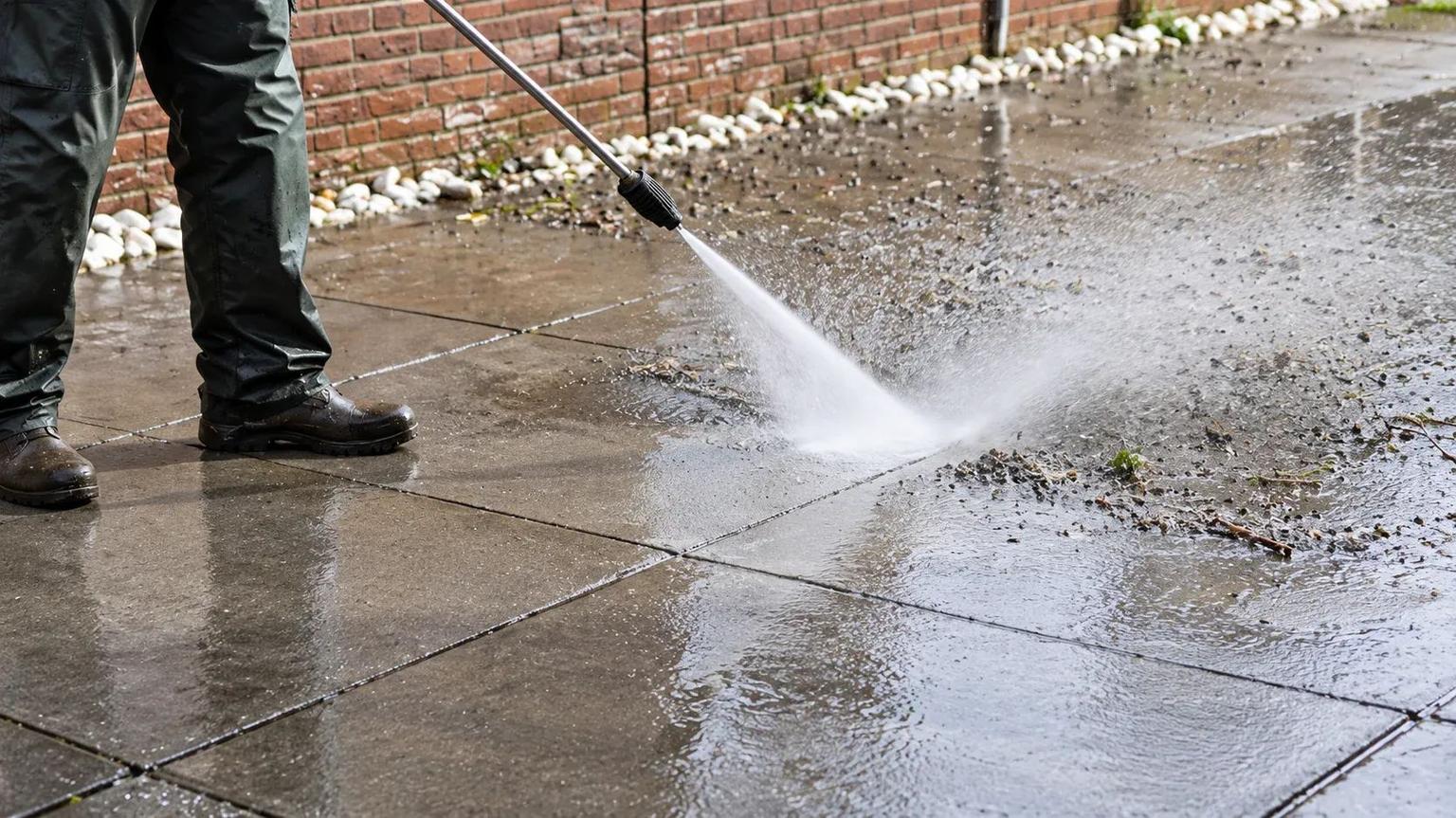
For most New Jersey homeowners, your driveway needs washing about once a year - but shaded, damp, or busy driveways often need it twice a year.
Your schedule depends on surface type, sun and shade, drainage, traffic, and seasonal buildup like road salt, pollen, algae, and leaves. In many cases, concrete = yearly, asphalt = every 1–2 years with low pressure or soft washing, and pavers = yearly with care around joint sand.
Here’s the short answer:
Quick Comparison
| Surface | Typical wash schedule | What to watch for |
|---|---|---|
| Concrete | About 1x per year | Too much pressure can scar the surface |
| Asphalt | Every 1–2 years | High pressure can strip the top layer |
| Pavers | About 1x per year | Pressure can remove joint sand and loosen pavers |
A simple rule: if your driveway looks dull, feels slick when wet, shows white salt residue, or has dark stains, don’t wait for the calendar.
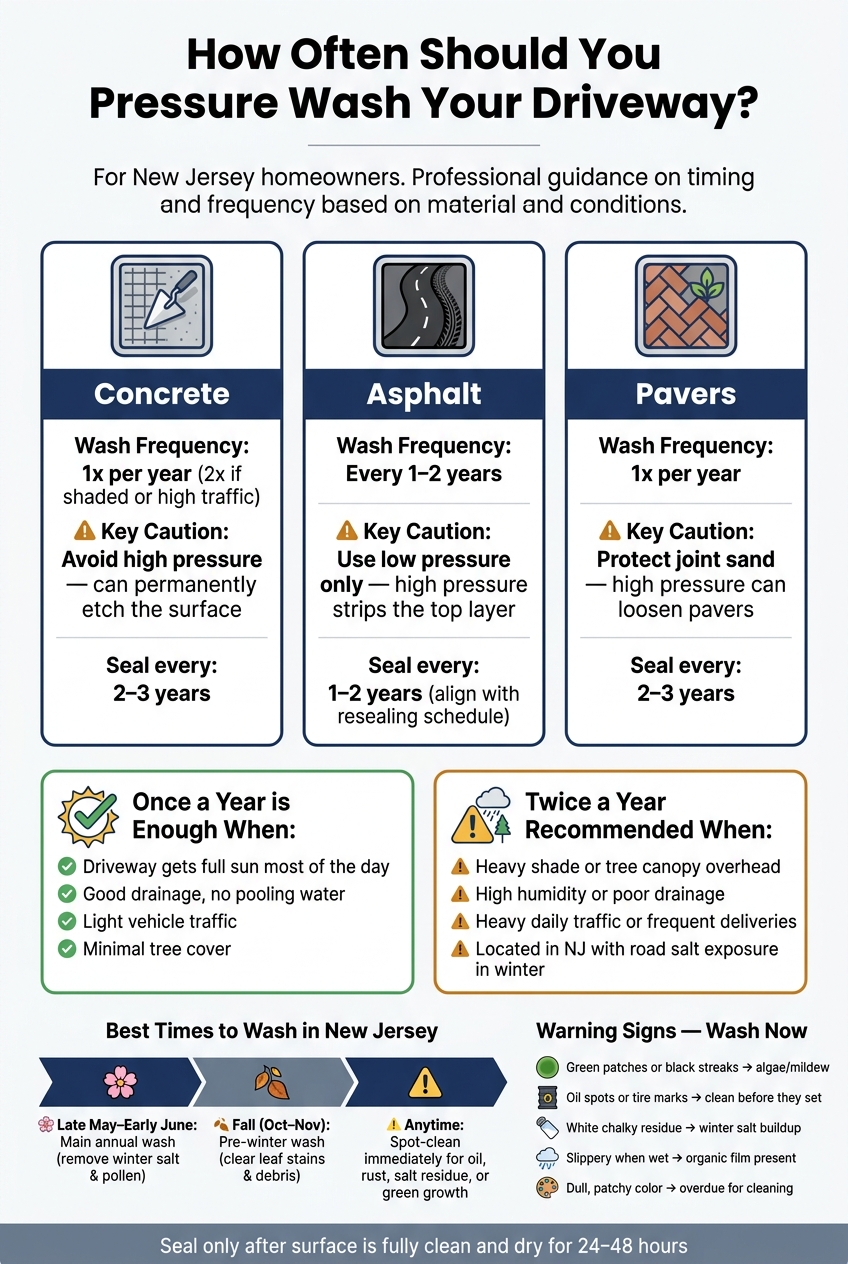
Driveway Pressure Washing Schedule by Surface Type & Condition
Once you have a general cleaning rhythm, the next step is to match it to the material. Different driveway surfaces don't just get dirty in different ways. They also react differently to water pressure. That means the right washing schedule depends on what your driveway is made of.
| Driveway Material | Typical Washing Frequency | Key Cautions |
|---|---|---|
| Concrete | Once a year; twice if shaded or high traffic | Porous; can etch under too much pressure. |
| Asphalt | Every 1–2 years | Use low pressure; high pressure strips the surface. |
| Pavers | Once a year | Protect joint sand; high pressure can loosen pavers. |
The notes below break down why each surface needs a different approach.
Concrete is tough, so it usually handles pressure washing pretty well. For most homes, one wash per year is enough. If the driveway sits in heavy shade or gets a lot of vehicle traffic, two cleanings per year can make sense.
The big thing to watch is etching. That's permanent surface scarring caused when the spray tip is too close or the pressure is too high. Think of it like sanding a surface by mistake. Once that damage is there, you can't just rinse it away.
Asphalt needs a lighter touch. It's softer than concrete, and too much pressure can strip off the top layer, expose the layer below, and speed up wear.
That's why washing every one to two years with a soft wash vs. pressure wash method is the safer move. In many cases, homeowners line this up with resealing, which helps keep the surface in better shape over time.
With pavers, the joints are just as important as the pavers themselves. The polymeric sand between the joints helps hold the pavers in place and keeps weeds out. But strong pressure can blow that sand out, which leaves the pavers loose and more likely to shift.
Because of that, the cleaning schedule often depends less on plain surface dirt and more on moss, weeds, or algae building up in the joints. After washing, inspect the joints. If sand has moved, re-sand them once the surface is fully dry.
Local conditions can shrink the time between cleanings. So instead of treating every driveway the same, look at what your property deals with day to day. That usually tells you whether once a year is enough or if every six months makes more sense.
Shade is one of the main reasons grime builds up faster. A shaded driveway stays wet longer after rain, which gives algae, mold, and mildew more time to grow. Leaves, seeds, and sap can also leave tannin-based stains behind, and those marks can sink into the surface over time.
If your driveway sits under trees or stays shaded for much of the day, a six-month cleaning schedule is usually the better fit.
A driveway can look clean one month and pick up a lot of buildup the next, especially in New Jersey. Spring salt, fall leaves, summer humidity, and winter de-icers each leave their own mess behind. If that material sits too long, it starts to add up.
Spring washing helps remove winter salt before it settles into the surface. The best time to wash is after winter, once the driveway is consistently dry and safe to clean.
Daily use matters just as much as weather. Poor drainage is one of the fastest ways to end up with buildup. When water pools after rain instead of draining off, algae and moss get exactly the damp surface they want.
"For driveways that bear heavy vehicle traffic or are near trees or landscaping, twice yearly is more appropriate." - Mr. Handyman of Princeton
Heavy traffic, regular deliveries, and vehicle leaks also make stains set faster. Oil and fluid spots should be cleaned right away. On busy driveways, fresh leaks need prompt attention because heat can bake them into the surface fast.
Skip the calendar if your driveway is already showing clear warning signs. In this case, the surface tells you more than the season does.
If the driveway feels slick when it gets wet, algae or mildew is often the reason. Green patches and black streaks usually point to organic growth that holds moisture on the surface, so it’s smart to wash it now.
Dark oil spots and fluid stains are easier to clean when you deal with them early, before they sink deeper into the porous surface. The same goes for tire marks. Let them sit too long, and they can get tougher to remove.
White, chalky residue usually means winter salt buildup. That residue holds moisture and can speed up cracking.
A driveway that looks patchy and dull is often overdue for a wash. One simple way to check is right after a rainstorm. If clean tire tracks stand out, the rest of the surface is likely covered in a heavy layer of built-up grime.
Dirt and grit work like sandpaper every time a car rolls over them, slowly wearing down the surface. If the driveway looks faded, dirty, and uneven, washing it sooner makes sense.
Once the driveway is clean, light upkeep helps slow the next round of buildup.
A clean driveway stays that way longer if you stick to a few simple habits. The idea is pretty simple: after washing, you want to slow down the next round of grime.
After washing, let the surface dry for 24 to 48 hours before you apply any sealer or stain.
Once the driveway is back in use, take care of fresh leaks and spills as soon as you spot them. Oil and automotive fluids are much easier to remove before they set into the surface. For fresh oil, spread an absorbent over the spot, leave it overnight, and sweep it up the next day.
When the surface is fully dry, sealing may be the next step for driveways that need extra protection.
Seal concrete or pavers every 2 to 3 years after a full cleaning and full dry time, especially for high-traffic driveways or homes near the coast. A good sealer helps slow moisture from getting in, resists oil stains, and makes future cleaning easier.
Apply sealer only after the surface has been professionally cleaned and is completely dry. If you seal over dirt or mold, you trap that mess in place.
"Only seal surfaces that are thoroughly dry and professionally cleaned. Sealing dirty or moldy surfaces locks in the damage." - A Brilliant Solution Power Washing
After that, light seasonal upkeep helps stop new buildup before it gets out of hand.
Between full washes, a little upkeep goes a long way. Sweep away leaves and debris every 1 to 2 weeks in the fall, rinse off pollen and brine in the spring, and keep an eye on shaded spots where algae can start early. Organic debris can leave tannin stains and help mold grow, and on paver driveways it works into the joint sand faster than most homeowners expect.
That light routine is what most North Jersey crews, Gutter Boys included, recommend between scheduled pressure washing visits. If your driveway is pavers rather than poured concrete, pairing that upkeep with a paver restoration check on the joint sand helps it hold up through the next freeze-thaw cycle.
That combination keeps your driveway looking clean well past the next scheduled wash.
Yes - if it’s done the wrong way.
Too much pressure can etch concrete, strip asphalt, push water into small cracks, leave patchy results or discoloration, and wash out joint sand.
But when pros use the right pressure settings - and switch to soft washing for more delicate spots - the process is safe, effective, and can help extend the life of your driveway.
In New Jersey, the best times to wash a driveway are late spring and early fall.
Late spring works well because it helps clear away winter salt, de-icing residue, grime, and pollen that build up over the colder months. Early fall is another smart window. It gives you time to remove leaves, algae, and salt film before damp winter weather sets in.
Another plus: both seasons usually bring moderate temperatures, which helps the surface dry all the way instead of staying damp for hours.
Yes. Sealing your driveway after professional pressure washing is common, especially for pavers and concrete.
The main reason is simple: a clean surface helps the sealer bond better. If dirt, grime, or organic buildup is still sitting on the driveway, the sealer may not stick as well or wear unevenly.
For the best result, have the driveway pressure washed a few days before sealing. That gives the surface time to dry all the way through, which helps the sealer cure more evenly.

.png)