


September 23, 2026
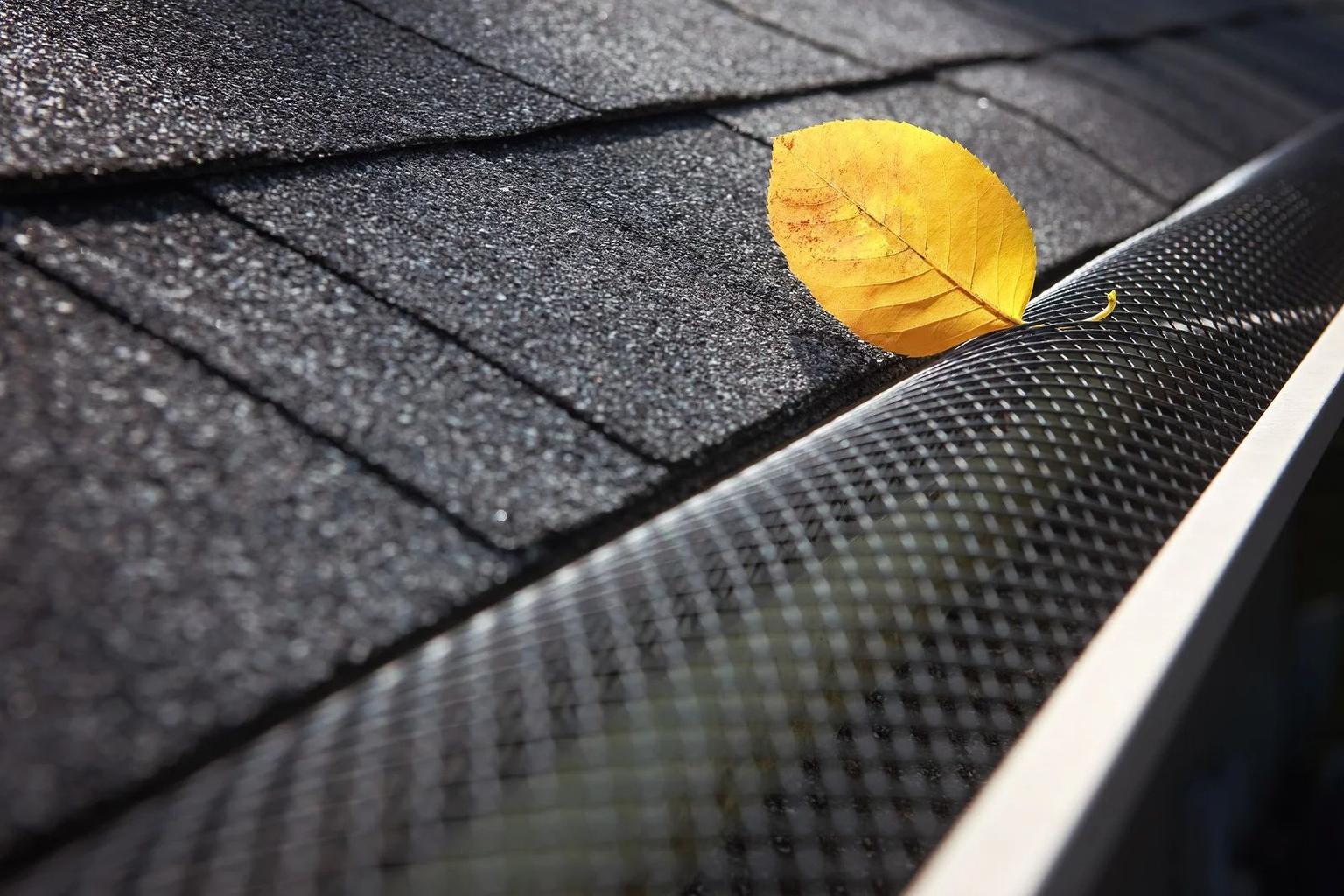
Yes - if your home deals with heavy leaf drop, pine needles, or hard-to-reach gutters. No - if your gutters clog only once in a while and cleanup is easy.
Your answer usually comes down to tree cover, roof and gutter setup, and how often you pay for cleaning now. In North Jersey, where annual rainfall hits 45.5 inches and storms can dump more than 1 inch in 20 minutes, clogged gutters can spill water onto fascia, soffits, siding, and the foundation. Gutter guards can cut cleanings from 2–4 times a year to about once a year, but they do not stop maintenance.
Before buying, keep these points in mind:
| Option | Best For | Main Problem | Upfront Cost |
|---|---|---|---|
| Micro-mesh | Leaves, seeds, pine needles, grit | Needs a yearly rinse or brushing | $8–$18/ft |
| Standard screen | Large leaves and twigs | Fine debris slips through | $3–$8/ft |
| Reverse-curve | Large dry leaves | Can overshoot in heavy rain | $10–$20/ft |
| Foam insert | Low-cost DIY setups | Holds moisture, wears out fast | $2–$5/ft |
Bottom line: gutter guards make sense when your home has repeat clogs, tall trees, risky ladder access, or overflow trouble. If your gutters are easy to reach and only need light cleaning once or twice a year, the money often works better elsewhere.
The rest of the article breaks down where guards help, where they fall short, and which type tends to work best in North Jersey.
When gutters are in good shape and you install the right guard, the payoff is real. Gutter guards stop large debris before it drops into the gutter trough. That can cut full cleanouts from 2 to 4 times a year down to about once a year.
They also help water keep moving through the trough and into the downspout. That means less overflow and less chance of damage around the house. In plain terms, you're lowering the odds of repairs to the fascia, soffit, siding, and foundation.
There’s also the safety side of it. Fewer cleanings means fewer trips up a ladder, which is a big deal on two-story homes or roofs with a steep pitch. This matters most for homes that deal with a steady load of leaves and need frequent cleanouts.
Gutter guards make the most sense when your home already has a repeat clog issue. If your house sits under mature oaks or maples, has pine trees close by, or gets leaves blowing in from next door, you’re probably cleaning gutters more often than you’d like. That’s where guards tend to make financial sense.
On a North Jersey home with 150 to 200 linear feet of gutters, a professional installation usually costs $1,050 to $4,500. Over time, that cost can be balanced out by fewer paid cleaning visits and less risk tied to each one.
Still, it’s worth being clear about what you’re buying: the right guard cuts down on maintenance, but it does not end it.
Gutter guards are not maintenance-free. Leaves and pine needles can still pile up on top of the guard. If that layer gets thick enough, water can sheet over the edge instead of flowing into the gutter.
Fine debris can cause trouble too. Pollen, shingle grit, and broken-down leaf matter can build up on mesh over time, and that slows drainage. In most cases, a yearly rinse or quick brush-off takes care of it, but you still need to do it.
Guards also do not stop ice dams. In some cases, frozen debris can make drainage worse during thaw cycles. A simple visual check after heavy snowfall and again after the first freeze-thaw cycle is a smart move.
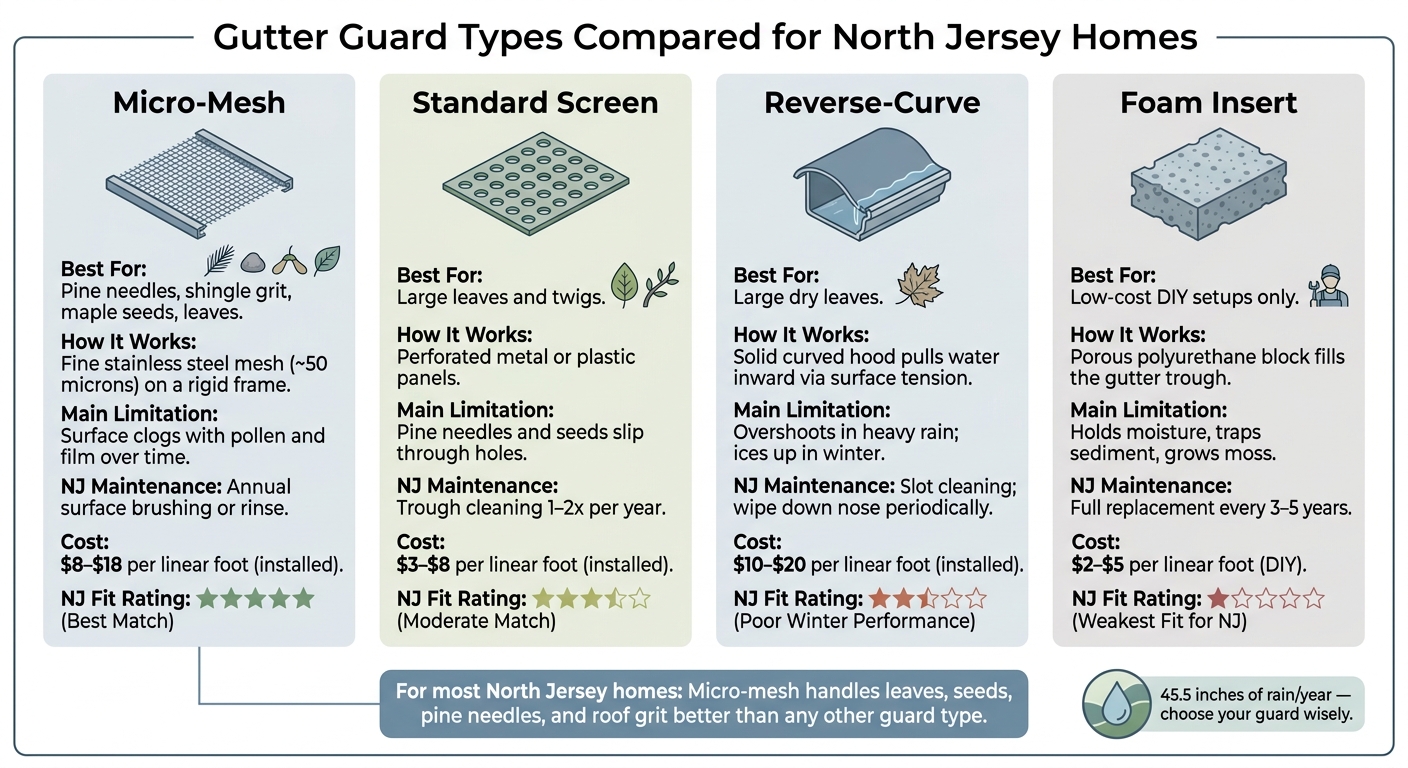
Gutter Guard Types Compared: Cost, Performance & Best Use for North Jersey Homes
If gutter guards still make sense for your home, the next step is picking the design that fits North Jersey weather. And that part matters more than people think. Different guard types deal with leaves, pine needles, and roof grit in very different ways. Pick the wrong one, and the gutter may still clog - just in a different spot.
| Guard Type | How It Works | Best at Blocking | Common Limitation | NJ Maintenance Needs | Relative Cost |
|---|---|---|---|---|---|
| Micro-Mesh | Fine stainless steel mesh on a rigid frame | Pine needles, shingle grit, maple seeds, leaves | Surface can clog with pollen and film | Annual surface brushing/rinse | High ($8–$18/ft installed) |
| Standard Screen | Perforated metal or plastic panels | Large leaves and twigs | Pine needles and seeds slip through holes | Trough cleaning 1–2x/year | Low to Moderate ($3–$8/ft) |
| Reverse-Curve | Solid hood using the curved design that pulls water inward | Large dry leaves | Can overshoot in heavy rain; slots clog with grit | Slot cleaning; wipe down nose to maintain tension | High ($10–$20/ft) |
| Foam Insert | Porous polyurethane block fills the gutter trough | Large debris initially | Holds moisture; traps fine sediment; grows moss | Frequent replacement (every 3–5 years) | Very Low ($2–$5/ft, usually DIY) |
For most North Jersey homes, the choice usually comes down to three things: how the guard deals with fine debris, what happens during hard rain, and how it holds up through winter.
Micro-mesh is usually the best match for North Jersey homes. The openings are roughly 50 microns - smaller than the width of a pine needle - which is why it can block fall leaves, spring maple seeds, and year-round pine needles that get past many other guard types. If your main headache is fine debris and roof grit, micro-mesh tends to be the safer bet.
That said, it's not set-and-forget. Pollen, shingle grit, and organic film can build up on top of the mesh over time. When that happens, water may run over the edge instead of draining through. In most cases, a quick brushing or rinse once a year is enough to deal with it.
Standard screen guards cost less at the start, which is why they're tempting. But for homes with pine needles or heavy seed drop, the larger holes leave too many openings for debris to get through. They also have another downside: to clean the gutter trough, you often need to remove the screens first, which cuts into the convenience people expect from guards in the first place.
Reverse-curve guards work by using a curved hood that pulls water inward and into the gutter. They can do a decent job with large, dry leaves. The catch is heavy rain. During strong summer downpours, water can shoot past the curved nose and spill over the front edge instead of flowing into the trough.
Winter can make things worse. Ice may form along the curved nose and create a ledge. During freeze-thaw cycles, that ice can put stress on the guard and may pull it away from the shingles. Some reverse-curve systems also need the bottom row of shingles lifted during installation. That can void certain roofing warranties if the work isn't done by a certified installer.
Foam inserts are the weakest fit for this area. They're cheap, simple to install, and easy to find. But North Jersey weather is rough on them. Humidity and freeze-thaw cycles can trap moisture inside the foam, help moss grow, and shorten its lifespan. The low up-front price can look good, but the long-term math usually doesn't. Foam often needs full replacement within 3 to 5 years, and by then it may already be holding moisture against the fascia and letting seeds sprout inside the gutter.
Guard type matters. But tree cover, roof pitch, and how much upkeep you're willing to do still play a big part in whether the spend makes sense.
After you compare guard types, the next step is simpler: figure out whether guards make sense for the house in the first place. The guard itself matters. But just as important is knowing when not to buy one at all.
For some North Jersey homes, skipping gutter guards is the smarter money move.
Install guards only after the gutter system is in good shape.
| Issue | Can Guards Fix It? | Better Solution |
|---|---|---|
| Undersized gutters | No | Upgrade to 6-inch seamless gutters |
| Poor pitch or sagging runs | No | Re-hang gutters to restore proper slope |
| Loose hangers or rotted fascia | No | Replace fascia boards and hangers first |
| Concentrated runoff from roof valleys | No | Add splash guards or larger 3×4 downspouts |
| Blocked underground leader lines | No | Clear lines before installing any guard |
Heavy-rain overflow usually points to gutter sizing, slope, or runoff problems, not just debris.
That distinction matters. A guard can help keep out leaves and small debris, but it won't fix a gutter that's too small or pulling away from the house. And if ice dams are the main issue, the fix usually starts in the attic. Insulation and ventilation matter more there than gutter hardware.
This is where the numbers matter most.
If your property has very little tree cover and your gutters only need cleaning once or twice a year, guards often don't pencil out. In North Jersey, a professional gutter cleaning usually costs $150 to $300 per visit. A full guard install on a typical home with about 150 to 200 linear feet of gutters can run from $1,050 to $4,500, depending on the guard type.
On a low-debris home, that means the payback period can stretch to more than 10 years. And even then, guards don't end gutter care. They cut down on cleanings, but they don't erase them.
One-story homes with easy gutter access are often a poor match too. If the gutters are simple to reach, the time and money saved by guards tend to be much smaller.
Once you know which guard type fits your roof, the next step is simple: compare cost against how often you deal with clogged gutters.
If your gutters need cleaning 3 to 4 times a year, the math starts to lean in one direction. In North Jersey, gutter cleaning now costs about $175 to $400 per visit, which puts you at roughly $525 to $1,600 per year. Stretch that over five years, and you're looking at $2,625 to $8,000 - and that’s before you add the less obvious damage that can come from overflow, like fascia rot, roof deck damage, and foundation saturation.
A micro-mesh installation usually costs $8 to $15 per linear foot installed. For a house with 175 linear feet of gutters, that comes out to about $1,400 to $2,625 upfront. In many cases, that cost can pay for itself within 3 to 5 years through lower cleaning and repair bills. If your gutters clog every season, the payback tends to come sooner. If you only need the occasional cleaning, it takes longer.
There’s also the safety side of this. On multi-story colonials, homes with steep rooflines, or setups where gutters sit above thick landscaping, repeated ladder work carries real risk. Add wet debris, ice, and snow into the mix, and the load can get heavy enough to pull gutters away from the fascia.
In day-to-day use, guards usually cut cleanings from 2 to 4 times a year down to 1 to 2. That makes the case much stronger for homes with:
When the cost math and the roof conditions line up, the answer gets pretty clear. Gutter guards make the most sense for North Jersey homes dealing with heavy debris, hard access, or repeat overflow problems. Houses under thick oak and maple canopy, or near pitch pines and white pines, often get the most out of them. That's especially true with micro-mesh, which handles North Jersey's mix of leaves, seeds, and needles well through the year.
Still, guards won't fix a gutter system that already has structural issues. You'll still need a quick yearly inspection and some light brushing now and then, because guards cut down on maintenance, they don't erase it. Gutter Boys and most reputable installers treat that yearly check as standard practice, not an upsell. The first step should always be a gutter system that's sound and properly sized. Guards come after that.
Consider gutter guards if you're tired of cleaning your gutters several times a year, especially when mature trees like oaks, maples, or pines keep filling them with debris.
They also make sense when your gutters are hard to reach or unsafe to clean, or if you've dealt with repeat overflow or water damage. That said, gutter guards aren't a fix for damaged gutters. If your gutters are sagging, leaking, or pulling away from the fascia, repair or replace them first.
Yes, but it depends on the guard type.
Micro-mesh guards can block pine needles and maple seeds because the openings are small enough to keep out fine debris.
Screen guards with larger holes, along with foam or brush inserts, usually don’t work as well with pine needles. They may let seeds through or trap debris and clog fast.
Yes - repair your gutters first.
Gutter guards only help when the gutter system is already in good shape and pitched the right way. They do not fix sagging sections, leaks, gutters that are too small, or gutters pulling away from the fascia.
If your gutters are worn out or already failing, adding guards can leave the actual drainage problem in place and push off a repair or full replacement. Once the gutters are repaired or replaced, micro-mesh guards can help cut down on clogs and overflow.

.png)