


September 16, 2026
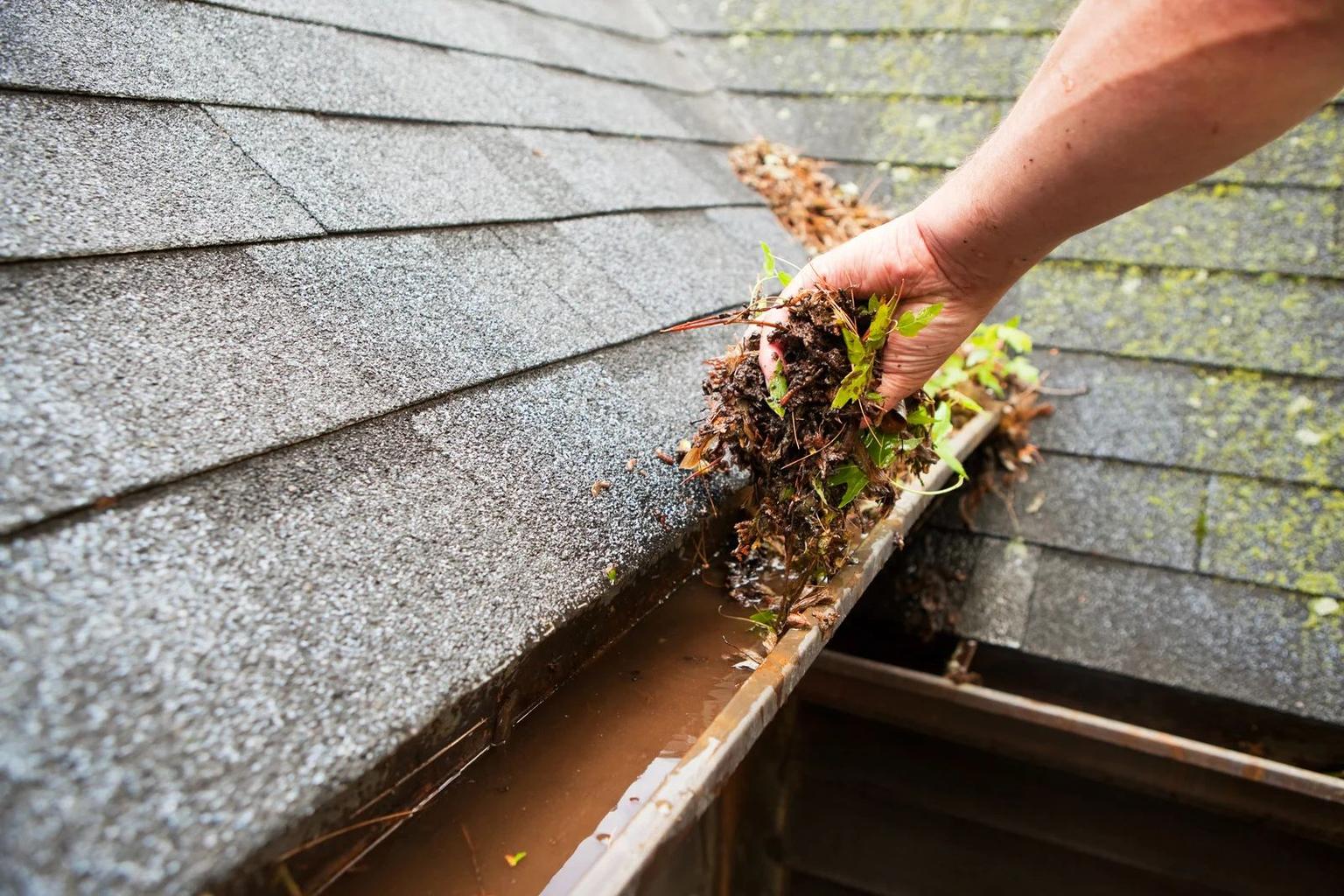
A clogged gutter can send water into your roof edge, walls, soil, and basement fast - and the average water damage claim is about $12,000 per incident.
If water spills over your gutters, the main risks are simple: wood rot at the roofline, stains and moisture behind siding, soil washout near the house, and basement seepage. In places like New Jersey, heavy rain, snowmelt, and freeze-thaw weather make the problem worse. Ice dams can also form when blocked gutters trap meltwater and push it under shingles.
Here’s the short answer:
One stat stands out: about 90% of wet basements may improve with better exterior drainage before interior waterproofing is needed. That makes gutter care a small job that can help prevent a much bigger one.
The section below breaks down the damage path, the signs to watch for, and the steps that help stop the problem before repair costs climb.
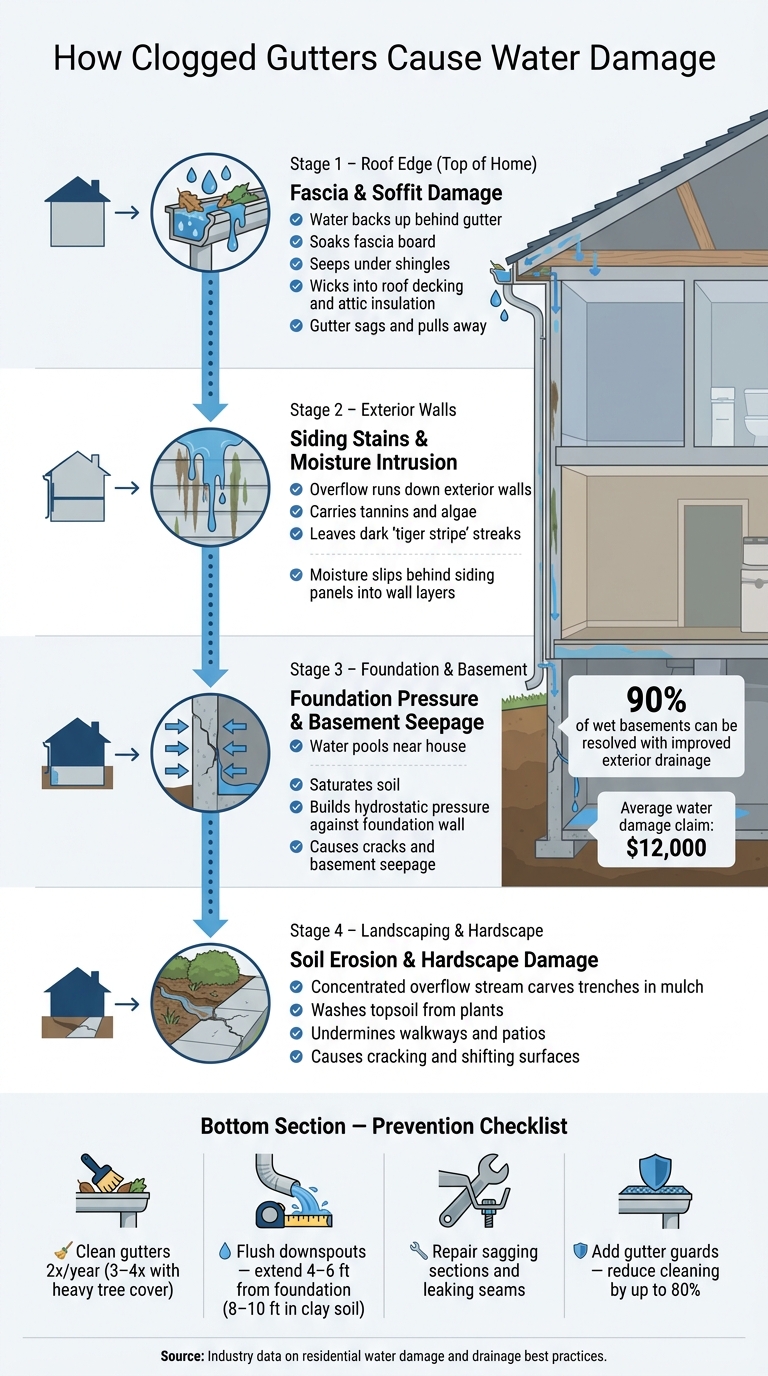
How Clogged Gutters Cause Water Damage: A Step-by-Step Path
Once gutters start overflowing, the damage usually follows a pretty predictable path. It starts at the roof edge, then works its way down the walls and into the ground. In plain terms: overflow tends to hit the roof edge first, then the siding, soil, and basement areas.
The fascia board runs along the roofline and holds the gutter in place. When a clogged gutter turns into a dam, water pushes up against the back edge, soaks the fascia, and can slip under the first row of shingles. Over time, the wood softens, paint starts peeling, and the fasteners holding the gutter begin to loosen. That’s when the gutter starts sagging or pulling away from the house.
The soffit - the underside of the roof overhang - can get soaked too. Once moisture gets in, it can wick up into the roof decking and attic insulation.
From there, the overflow keeps traveling down the outside of the home.
When water spills over the front of the gutter, it runs straight down the exterior wall. Along the way, it carries tannins, algae, and debris that leave dark streaks on siding. Those stains are the part you can see. The bigger issue is what may be happening behind them, where moisture can slip past the panels and into the wall layers underneath.
The bigger risk sits at the foundation. Water pooling near the house saturates the soil and builds pressure against the foundation wall. In New Jersey's clay-heavy soils, repeated wet-dry cycles can crack foundation walls and lead to basement seepage. Approximately 90% of wet basements can be resolved by improving exterior drainage - such as gutters, downspouts, and grading - before interior waterproofing is needed.
Once that water reaches the ground, it doesn’t just disappear. It can keep moving into beds, paths, and hardscape below.
When one section of gutter gets blocked, water tends to pour out in one heavy stream. That concentrated flow can carve trenches through mulch beds and wash topsoil away from plants near the foundation. Shrubs and perennials sitting right below the overflow can end up drowning from repeated saturation.
That same runoff can also hit walkways and patios. Over time, water washing out the soil under hardscape can cause surfaces to crack, shift, or become uneven. In winter, spilled water can turn into a slip hazard. And if the soil around the house already slopes toward the home, overflow only makes things worse by sending even more water back toward the foundation.
Most gutter issues wave a red flag before they turn into a big repair bill. The key is knowing where to look. In most cases, the first clues show up on the gutters, then on the walls and ground below.
One of the clearest signs is water pouring over the front edge of the gutter during rain. If it spills over in the middle, that often means a clog or a sag. If it happens near the ends, a blocked downspout is usually the cause.
Take a look at the outside of the gutter too. Dark vertical streaks, often called "tiger striping", are a sign of repeated overflow. You may also spot rust streaks.
It also helps to check two simple things: whether the gutter still sits tight against the fascia, and whether anything is growing inside it. A gutter that’s pulling away or sagging in the middle won’t move water the way it should. And if you see weeds or moss in the trough, that means debris has been sitting there long enough to hold moisture and trap even more buildup.
If the gutters seem blocked or damaged, look at the areas below them for early signs of water getting where it shouldn’t. Peeling paint on fascia boards near the roofline points to ongoing moisture. On siding, watch for dark streaks, mildew, or peeling paint below the gutter line.
At ground level, check the soil right under the roofline. Erosion channels cut into mulch or bare soil, along with washed-out mulch and exposed plant roots, usually mean overflow keeps hitting the same spot. Standing water or puddles near the foundation suggest the same drainage issue.
On the foundation itself, white chalky deposits called efflorescence on masonry are a strong sign that water is moving through the wall from the outside. Inside the basement, musty smells or damp corners near exterior walls often point to the same issue. During heavy rain, see whether water pools within 3 feet of the foundation.
These clues usually mean it’s time to clean, flush, or fix the gutter system before the damage spreads.
Once you spot overflow, the fix depends on the cause. Clear out debris, flush the downspouts, fix leaks or pitch issues, and then think about guards if clogs keep coming back. The goal is simple: match the repair to what you found.
If the overflow comes from visible debris, a good cleaning is often all it takes. Clean gutters twice a year - late spring and late fall. If your home sits under heavy tree cover, plan on 3 to 4 cleanings a year.
Don’t stop at the gutter trough. Flush each downspout after cleaning and make sure it moves water 4 to 6 feet away from the foundation. If you have clay-heavy soil, push that distance to 8 to 10 feet.
If the overflow keeps happening after cleaning and flushing, you’re likely dealing with more than a clog.
If water still spills over after the system is clean, the issue is probably with pitch, seams, hangers, or gutter size. A gutter that sags in the middle will hold water even when it looks clear. Loose hangers, leaking seams, leaking end caps, or separated joints can let water escape before it ever reaches the downspout.
In some cases, one section needs to be re-pitched or replaced. That’s especially common when the system is 20 years old or more.
Once the gutters are clean and draining the way they should, guards can help cut down on future clogs.
If your home deals with frequent debris buildup, RainDrop gutter guards are worth a look after the system is cleaned and repaired. They cover the gutter opening, let water flow in, and help keep out leaves and larger debris. RainDrop gutter guards can cut cleaning frequency by up to 80%.
Still, guards aren’t a set-it-and-forget-it fix. They should be checked once a year, since fine material like shingle grit and pine needles can still build up over time.
A clogged gutter can push water back up and over the edge. Once that happens, water can spill into the fascia, run down the siding, soak the soil around the foundation, and even make its way into the basement. What starts as a small upkeep problem can turn into an expensive repair job fast.
Watch for early signs like peeling paint near the roofline, washed-out mulch, dark streaks on siding, and a musty smell in the basement. These are your warning flags. If you catch them early, the fix is usually much simpler.
If you notice any of these issues, move fast:
If your home has heavy tree cover, adding RainDrop gutter guards after a cleaning can help cut down on future clogs. Gutter Boys installs RainDrop as part of its gutter guard service, and if those warning signs are already showing up, it's smart to schedule an inspection before the damage spreads.
Routine gutter maintenance costs a lot less than fixing water damage.
Yes. Clogged gutters or downspouts that empty too close to your home can let water collect around the foundation and soak the soil.
That water buildup creates hydrostatic pressure against basement walls. In plain English, the soil pushes moisture against the wall like a slow, steady squeeze. Water can then slip through small cracks or weak seals.
Over time, that can lead to seepage, dampness, or even flooding. A simple fix is to extend downspouts 4 to 6 feet away from the foundation to help move water away from your home.
Cleaning is usually enough when the gutters are secure, set at the right slope, and simply packed with leaves, twigs, or other debris.
You likely need repair if the gutters sag, pull away from the fascia, leak at the seams, or sit at the wrong pitch so water pools instead of moving to the downspout. And if the gutters are clean but still overflow during heavy storms, they may be too small for your roof area.
No. Gutter guards can help cut the risk of water damage by keeping out larger debris like leaves and sticks, but they’re not a complete fix.
Smaller debris, such as dirt, pine needles, and roofing granules, can still collect over time. That means you’ll still need periodic inspections and occasional cleaning.

.png)