


August 18, 2026
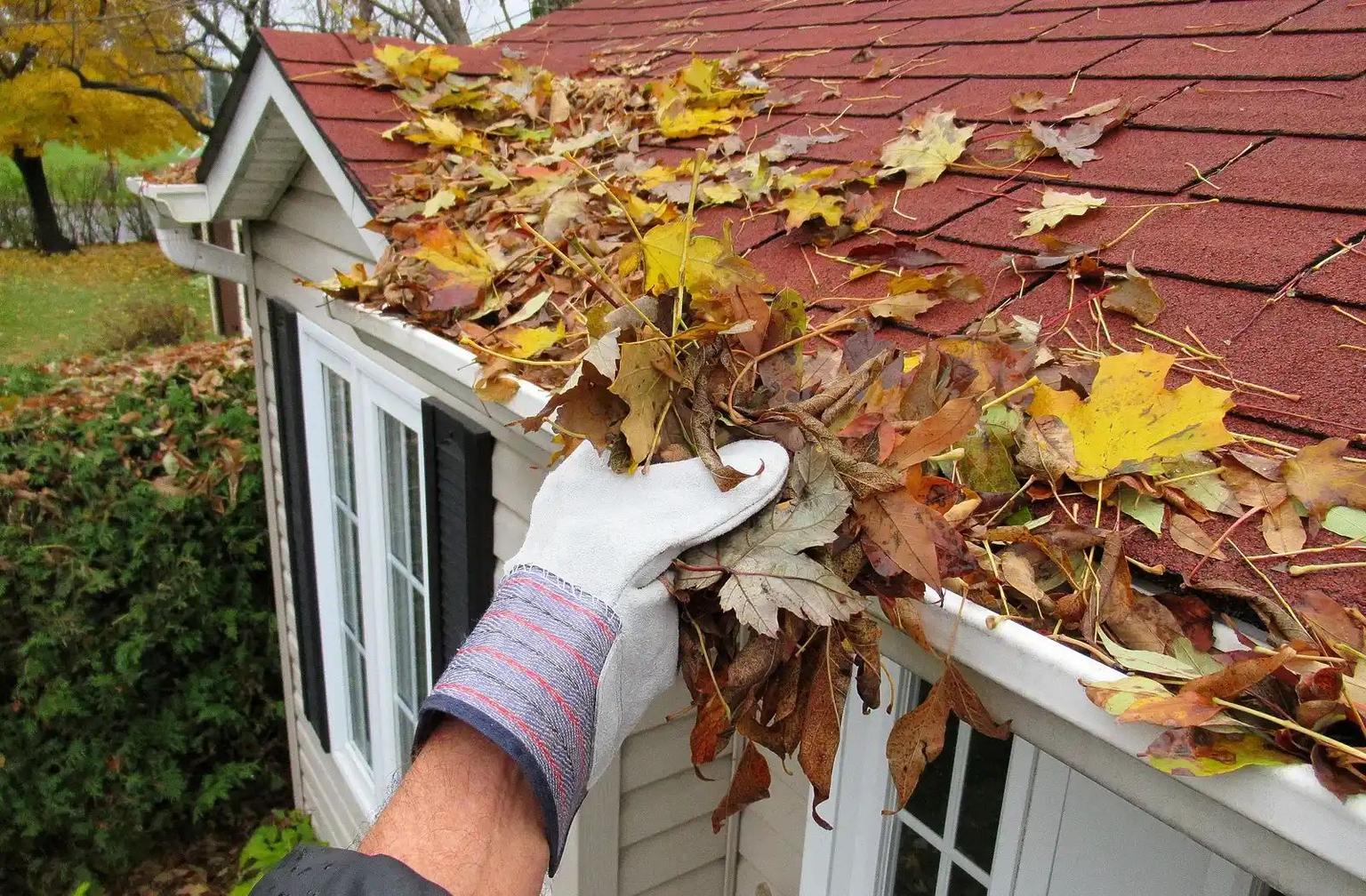
If your gutters overflow, sag, grow plants, or leave puddles near your home, clean them before the first freeze. A clog in fall can turn into roof leaks, wood rot, ice dams, or damage near the base of the house by winter.
Here’s the short version:
A few timing rules matter most:
| Sign | What it usually means | How fast I’d act |
|---|---|---|
| Water overflowing | Gutter or downspout clog | Within days |
| Sagging sections | Too much weight or weak fasteners | Within days |
| Leaves or granules visible | Debris buildup or roof wear | 1 to 2 weeks |
| Plants growing in gutter | Long-term wet buildup | Within days |
| Stains or peeling paint | Water escaping over time | 1 to 2 weeks |
| Pest or nesting activity | Wet debris creating shelter | 1 to 2 weeks |
| Pooling water near house | Poor drainage or blocked downspout | Within days |
Bottom line: if I spot even one of these signs, I’d treat it as a warning that winter can make more expensive problems show up fast.
Use this checklist to spot the most common warning signs fast.
If water spills over the sides during rain, you’re likely dealing with a clog. In most cases, the gutter or downspout is blocked, so water can’t move where it’s supposed to go.
That runoff then slides down your siding and collects near the base of the house. Once freezing weather hits, that problem can get worse in a hurry.
A sagging gutter usually means it’s carrying too much weight already. That puts it at a higher risk of failing once freezing weather adds more stress.
If one section is leaning or pulling away now, winter conditions can drag it even farther from the house.
If you can see leaves, twigs, or shingle granules sitting in the gutter, it’s close to full. That debris blocks water flow and adds weight to the system.
Granules are worth paying attention to. If they’re piling up in the gutter, your roof may be wearing down faster, and the extra weight can strain the gutter before freezing weather makes the situation worse.
Once debris starts trapping moisture, the signs tend to spread. You may start noticing marks on the gutter itself and on the siding below.
Plants growing in a gutter are a dead giveaway that the clog has been there for a while. It means moisture has been trapped long enough for debris to break down and turn into sludge.
At that point, this isn’t just a small buildup. It’s a sign the gutter has been holding wet material long enough to support growth.
Dark streaks, peeling paint, or mildew below the gutter usually mean water is escaping instead of draining the right way. That kind of repeated overflow can slowly damage siding and fascia boards.
And there’s another issue: standing debris can attract pests.
If you’re seeing pest activity around the roofline, clogged gutters may be part of the problem. Damp debris creates a sheltered spot that pests can settle into without much trouble.
Gutters full of wet material tend to become easy nesting areas because they hold moisture and stay out of sight.
Puddles near the foundation or soil that looks washed out below a downspout usually mean the gutter system isn’t pushing water far enough away from the house. Downspouts should carry water at least 3 to 5 feet away from the foundation.
If a downspout is blocked or disconnected, water stays too close to the house and increases the risk of foundation damage. Schedule cleaning before the next freeze.
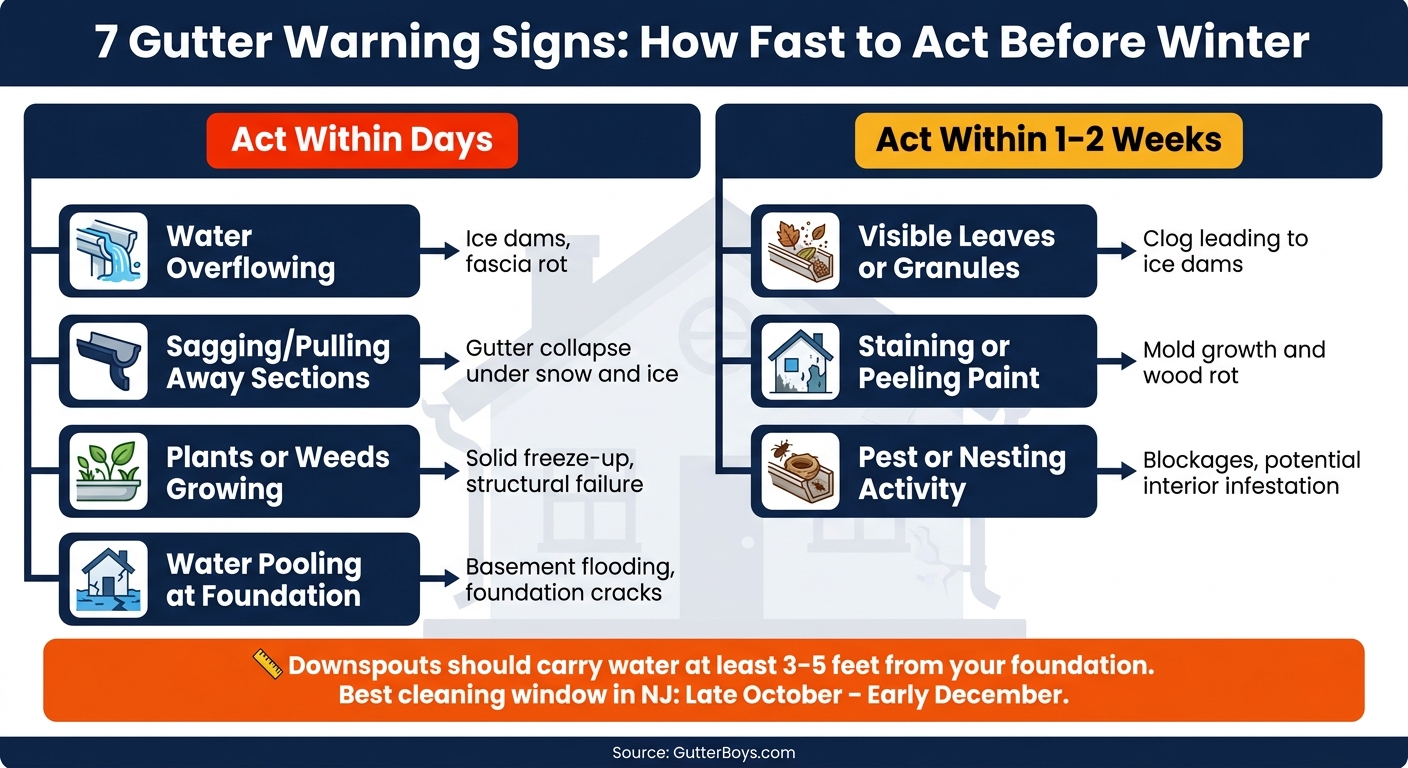
7 Gutter Warning Signs: What They Mean & How Fast to Act
Now that you know the seven warning signs, the next step is figuring out how soon you need to deal with each one.
Some gutter issues need fast action. Others give you a little breathing room before winter starts making things worse. The goal is simple: fix the problem before cold weather turns a small mess into a bigger repair bill.
If you see active overflow, sagging sections, plant growth, or water pooling near the foundation, act within days. Once freezing weather hits, those problems can lead to gutter collapse, fascia damage, or leaks.
If you notice debris, staining, peeling paint, or pest activity, don’t sit on it for long. Try to handle those within 1 to 2 weeks. Slow leaks and trapped moisture can get worse through winter, even if the damage seems minor at first.
This chart turns each warning sign into a simple action window.
| Warning Sign | Likely Cause | Winter Risk in NJ | How Fast to Act |
|---|---|---|---|
| Water Overflowing | Blocked channel or downspout | Ice dams, fascia rot | Within days |
| Sagging/Sections Pulling Away from the House | Heavy debris or failed fasteners | Gutter collapse under snow and ice | Within days |
| Plants or Weeds Growing | Decomposed organic buildup | Solid freeze-up, structural failure | Within days |
| Water Pooling at Foundation | Clogged or disconnected downspout | Basement flooding, foundation cracks | Within days |
| Visible Leaves or Granules | Recent leaf fall or roof wear | Clog leading to ice dams | 1–2 weeks |
| Staining or Peeling Paint | Chronic overflow or slow leaks | Mold growth and wood rot | 1–2 weeks |
| Pest or Nesting Activity | Debris providing shelter | Blockages, potential interior infestation | 1–2 weeks |
If any sign lands in the within days column, schedule cleaning before the next freeze.
Once you notice one of the seven warning signs, timing matters. For most New Jersey homeowners, the best window is late October through early December - after most leaves have dropped and before the first hard freeze or snowfall.
That said, don’t wait just because it’s not “the right month” yet. Use the checklist above to decide if you need cleaning now. If you’ve already seen overflow, sagging, or pooling water, it makes sense to clean the gutters sooner.
Some homes need service earlier because debris piles up fast. If your property is surrounded by mature oak, maple, or pine trees, a two-step fall plan often works best: one cleaning in mid-fall and another in late fall after the last big leaf drop.
Certain home setups can also call for more frequent cleaning, including:

If cleaning is overdue, professional service can stop a small clog from turning into winter damage. Neglected gutters can lead to costly roof and foundation problems. Professional cleaning helps stop that buildup before winter sets in.
Gutter Boys provides gutter cleaning, exterior cleaning, and RainDrop gutter guard installation in Morris, Sussex, Warren, Hunterdon, and Somerset counties. Gutter guards can cut the number of needed cleanings by 70% to 90%.
If you spot even one warning sign - overflow, sagging, or plant growth in the gutter - it's time to book a cleaning. A clog doesn't just sit there quietly. It gets worse, and the damage adds up fast. If any of these signs show up around your home, schedule cleaning before temperatures drop.
When you see several signs at once, the gutter system is likely already under stress. Overflow, water pooling near the foundation, and stains on the siding usually point to a system that's no longer draining the way it should.
The good news is simple: early cleaning costs far less than fixing overflow damage, wood rot, or ice-dam problems.
Use this checklist every fall. After a rain, take a walk around your property and look closely at the roofline and foundation. If you notice a warning sign, act before the first freeze.
Yes. Clogged gutters can lead to roof leaks in winter because blocked water builds up along the roof edge and freezes into ice dams.
Once those ice dams form, they can push melting water under shingles and into the attic or walls. That can lead to roof leaks and water damage.
Make sure your downspouts carry water at least 3 to 5 feet away from your foundation. Some standards suggest 4 to 6 feet for better protection.
If water pools near your home after rain, your drainage probably isn’t reaching far enough. In that case, extending the downspouts or routing them into a drainage system can help.
Yes - plan to clean your gutters twice in the fall in New Jersey: once in early October and again in early November.
If your home sits near a lot of trees or gets hit with heavy leaf drop, you may need one more cleaning later in the season. That extra pass can save you a headache once colder weather rolls in.
Cleaning on this schedule helps prevent:
It’s a simple bit of upkeep, but it goes a long way toward keeping water moving where it should.

.png)