


August 23, 2026

Use pressure washing for hard surfaces like concrete and stone. Use soft washing for roofs, siding, stucco, and wood. That is the short answer.
If you choose the wrong method, you can damage your home fast. Pressure washing uses 1,500 to 4,000+ PSI and works best on dirt, grease, oil, and ground-in grime. Soft washing uses 100 to 800 PSI plus a cleaning mix to kill algae, mold, and mildew at the source, and the results often last 18 to 30 months instead of 12 to 18 months.
Here’s what you need to know right away:
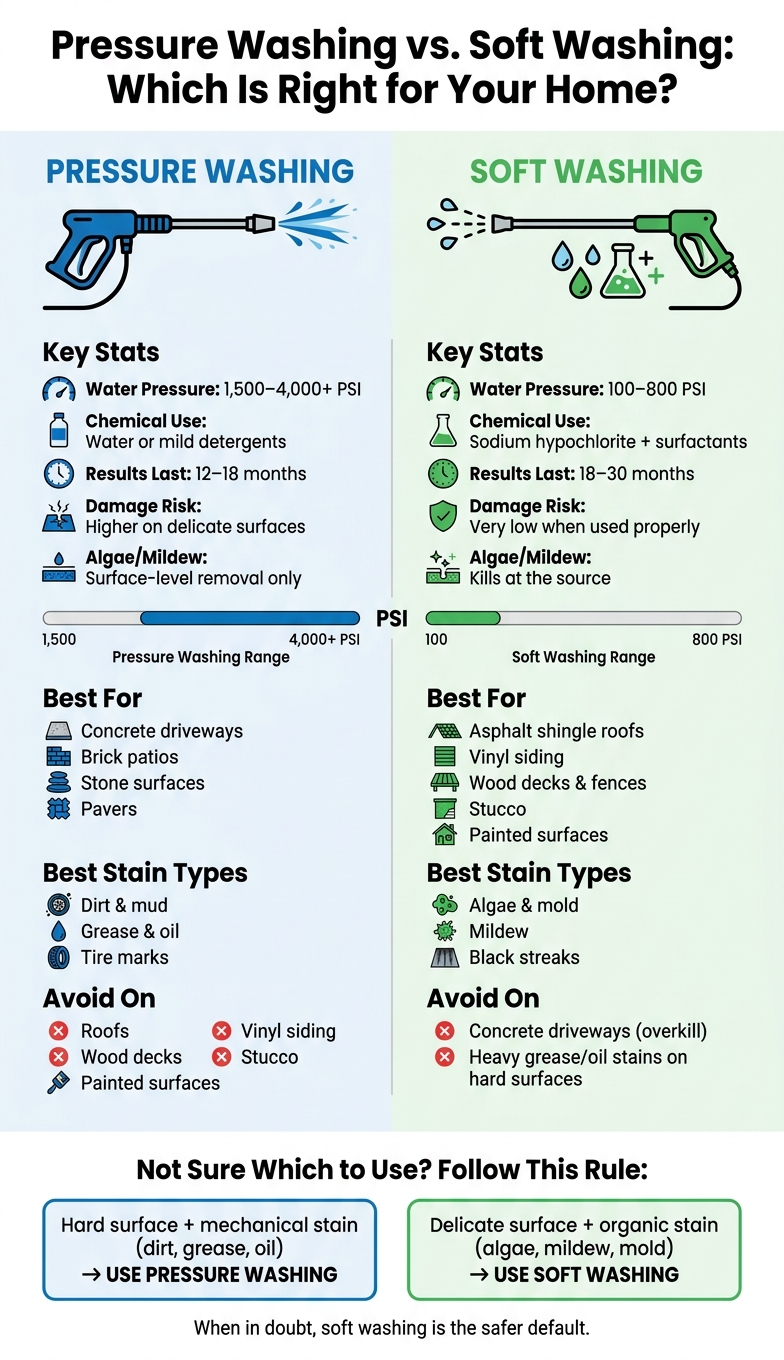
Pressure Washing vs. Soft Washing: Which Method Is Right for Your Surface?
| Surface or factor | Pressure washing | Soft washing |
|---|---|---|
| Water pressure | 1,500–4,000+ PSI | 100–800 PSI |
| Main cleaning method | High-force water | Low pressure + treatment solution |
| Best for | Concrete, brick, stone, some pavers | Roofs, siding, stucco, painted areas, decks |
| Dirt type | Mud, grease, oil, tire marks | Algae, mold, mildew, black streaks |
| Damage risk | Higher on delicate surfaces | Lower when used the right way |
| How long results often last | 12–18 months | 18–30 months |
In plain terms, you should match the method to your surface and your stain before cleaning starts.
Here’s what each method is doing on the surface. That difference matters most when the material can’t take the wrong type of cleaning.
Pressure washing uses water at 1,500 to 4,000+ PSI to strip away dirt, mud, grease, and stubborn stains from hard surfaces. That level of force works well on concrete, brick, and stone.
But on wood, vinyl, stucco, or asphalt shingles, that same force can cause damage fast. It can splinter wood fibers, etch soft concrete, strip paint, and push water behind siding panels, where hidden mold can start to grow. It’s a strong tool, but it makes sense only on surfaces built to handle it.
Soft washing works in the opposite way. Instead of relying on force, it uses a cleaning solution that kills organic growth - usually sodium hypochlorite mixed with a surfactant - applied at low pressure, often 100 to 800 PSI in professional systems.
That solution sits on the surface for 5 to 15 minutes, which gives it time to kill algae, mildew, and mold at the source before the rinse. Since it treats the growth itself instead of just blasting off what you can see, soft washing usually lasts much longer than pressure washing alone. That’s why the method-to-surface match matters so much.
At this point, the choice depends on two things: the surface you're cleaning and the type of stain you're dealing with.
Pressure washing relies on force. Soft washing uses low pressure plus a treatment solution. That one difference changes how each method cleans, where it should be used, and how long the results tend to last.
| Feature | Pressure Washing | Soft Washing |
|---|---|---|
| Cleaning Force | High (1,500–4,000 PSI) | Low (100–800 PSI) |
| Chemical Use | Water or mild detergents | Sodium hypochlorite + surfactants |
| Best Surface Types | Concrete, brick, stone, pavers | Roofs, siding, stucco, painted surfaces, wood decks |
| Damage Risk | Higher risk of etching, splintering, and water intrusion | Very low when used properly |
| Algae/Mildew Removal | Surface-level removal only | Kills at the source |
| How Long Results Last | 12–18 months | 18–30 months |
Here’s the plain-English version: pressure washing is great when brute force does the job. Think dirt, grease, and oil on hard surfaces. Soft washing works better when the stain is alive or rooted in the surface, like algae or mildew.
That’s why pressure washing can clean a surface and still leave organic growth behind. The area may look better right away, but stains often come back sooner. Soft washing goes after the cause, so results usually last longer on algae and mildew.
A simple rule of thumb:
If you put it another way, pressure washing is the better fit for hard, durable surfaces. Soft washing is the safer pick for surfaces that can be damaged by too much force.
Here’s how that rule plays out on the surfaces you’ll see most often around a home.
Concrete driveways can usually take high-pressure washing because it helps cut through tire marks, oil, and ground-in grime. It’s a tough surface, so pressure is often the right tool.
Paver patios are a different story. They need more control because too much pressure can wash out the joint sand or wear down the surface. After cleaning, re-sanding the joints is part of the job.
Use soft washing on vinyl siding, stucco, painted surfaces, and roofs. High pressure can crack seams, damage stucco, strip paint, and remove shingle granules.
Asphalt shingles need the most care. Major roof manufacturers, including GAF and Owens Corning, only approve soft washing for their products. If you’re dealing with black roof streaks, soft washing does more than clean the surface. It kills the algae at the source.
Decks call for the same kind of care, especially when wood is part of the area. Wood fibers are soft enough that high pressure can splinter the grain and leave behind a fuzzy surface that needs sanding before refinishing.
Wood and composite decks both need low pressure and a deck-safe detergent to help prevent splintering and surface wear. If the space also has nearby concrete or brick, those harder surfaces can usually handle more pressure.
After washing a wood deck, give it 48 to 72 hours to dry before staining, painting, or sealing.
Use a simple rule around the house: match the cleaning method to both the surface and the type of stain. Hard, durable areas with dirt, oil, or tire marks usually call for pressure washing. Siding, roofs, and wood with mildew, algae, or other organic buildup are usually better suited for soft washing.
Green or black streaks on siding, a roof, or a deck usually point to biological growth. Pressure washing may strip off what you can see on the surface, but organic stains often come back fast if the source is still there.
If you're unsure, go with soft washing. It's the safer default for delicate surfaces and areas that tend to grow mildew or algae. Gutter Boys, like most experienced crews, defaults to soft washing on siding and roofs for this reason: too much pressure can leave permanent damage on the wrong material.
The main rule is simple: pressure washing works best for hard surfaces with tough mechanical stains, while soft washing works best for organic growth and delicate exterior materials. Pick the wrong method, and the damage can get expensive.
Here’s a quick guide for cases where the choice isn’t obvious.
| Surface | Best Method | Why |
|---|---|---|
| Concrete driveway | Pressure washing | Hard surface, mechanical stains |
| Asphalt shingle roof | Soft washing only | Avoids granule loss and warranty concerns |
| Vinyl or wood siding | Soft washing | Prevents damage, kills mildew |
| Wood deck or fence | Soft washing | Avoids grain damage and splintering |
| Brick or stone patio | Pressure washing | Durable surface, ground-in dirt |
If one area mixes materials, choose the method based on the most delicate surface.
Yes - soft washing can damage plants and landscaping if it’s done the wrong way, but that risk can usually be avoided.
Good contractors protect nearby greenery by pre-rinsing plants and lawns, keeping the cleaning mix under control with surfactants, and finishing with a thorough final rinse. When those standard safety steps are followed, soft washing is generally considered safe for the area around your home.
Most homes should get an exterior check or cleaning about once a year. For concrete driveways and sidewalks, pressure washing is usually the best fit, and once a year is enough for most homes.
For siding, stucco, and painted surfaces, soft washing is the safer option. A good rule of thumb is every 18–30 months.
Roof soft washing usually comes up every few years. If algae or mildew comes back sooner, tighten the schedule a bit, especially if the home sits in the shade or near the coast.
No. The cleaning method needs to fit the surface, or you can end up with expensive damage.
High pressure can damage siding, stucco, roofs, and painted wood. On the flip side, soft washing is often too gentle to remove deep-set dirt or oil stains from concrete driveways and sidewalks.
That’s why many pros use both in the same job: soft washing for the home’s exterior, and pressure washing for hard surfaces like driveways, walkways, and other hardscapes.

.png)