


October 20, 2026
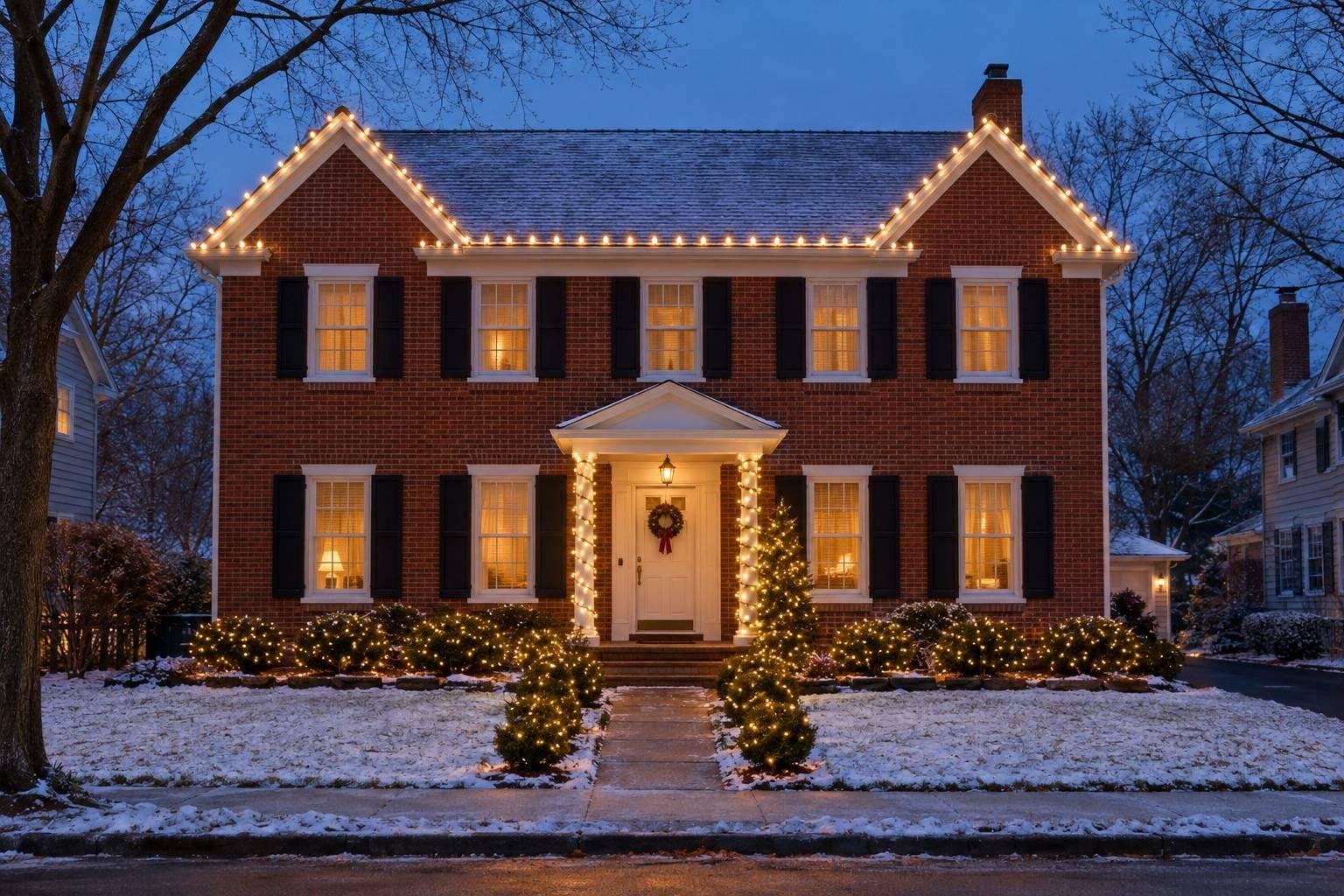
For a North Jersey Colonial, start with warm white C9 LEDs along the main roofline, then match the lighting on paired features. Choose 2700K–3000K bulbs spaced 12 inches apart, and use your centered entry to guide the layout.
Your lighting plan can include:
Choose a full outline when the visible roof edges are simple, or <u>accent lighting</u> when several peaks would make the display look crowded. Check your plan from the curb before deciding which lines to light.

Christmas Lighting Layout for North Jersey Colonial Homes
Plan from the curb, not the front steps. Look at which main rooflines, front gables, paired dormers, and matching windows you can see around trees and shrubs. Use the centered entry as your anchor, keeping both sides visually balanced even if landscaping hides part of the house. Then outline the main features one at a time.
For complex roofs, light the strongest lines and leave secondary peaks dark. Keep each run on a single roof plane so strands don’t visibly sag across gaps. Once you’ve mapped the layout, choose bulb sizes and spacing that suit the roofline.
Match the lights to the home’s size and distance from the street. Commercial-grade LED C9 bulbs give a two-story roofline a clear outline, while 12-inch spacing creates even points of light. Point bulbs toward the street, not down into the gutters.
Gutter Boys’ Christmas light installation service includes custom design for balanced placement, spacing, and brightness.
Start with the main roofline, then work through the paired features visible from the curb.
Start with the main roofline, then trace matching visible gables with commercial-grade LED lighting. Frame front-facing windows on both floors to carry the outline down the façade. Keep the lighting even on both sides.
Use the same bulb count and spacing on matching dormers. End each run at a roof corner, leaving no overlaps or dark gaps. Keep paired features equally bright so neither dormer nor window outshines its match. Once the roofline is balanced, carry that symmetry down to the entry.
Wrap the entry columns with smaller commercial-grade LED mini lights, using the same spacing on both columns. Save the bolder C9 outline for the roof. Match the color temperature across the roofline, windows, and columns so the entrance feels connected while the roof remains the stronger accent.
With the roofline mapped, choose warm white commercial-grade LED lights rated 2700K–3000K to suit North Jersey’s brick, clapboard, and stone. Their soft amber glow complements these materials without washing them out. Check the Kelvin rating - not just the “warm white” label - to get the right tone.
For a clean roofline, use warm white commercial-grade LED C9 bulbs spaced 12 inches apart. Aim the bulbs outward to create a crisp outline.
Carry the same warm white tone into garlands and window boxes, matching them to the roofline C9s. Use commercial-grade LED mini lights below the eaves for a softer layer that ties the lighting together.
With the roofline outlined in warm white, add color where you want to draw the eye. Place multicolor commercial-grade LED lights on a center gable or matching dormers - not every roof section. Let the warm-white roofline lead, and keep secondary roof edges dark. For balance, limit multicolor accents to matching features and repeat the same color pattern on each.
Frame the front door or wrap both columns with matching multicolor commercial-grade LED mini lights. Space the wraps evenly, then repeat the palette in matching foundation shrubs. Keep any other accent features just as restrained.
For a simpler layout, light only the main eaves and center gable. Trace the main eave line with commercial-grade LED C9 bulbs. If your Colonial has a prominent center gable, follow both sloped edges - the rake lines - to outline the peak. Leave secondary features, such as dormers, dark for a cleaner silhouette. This keeps the house’s centerline visually anchored and makes the roofline easy to read from the street.
Keep each light run on a single roof edge for a crisp outline. Check the layout at dusk: the horizontal run should look even across the house, with the center gable as the focal point.
Custom design through Gutter Boys’ Christmas light service helps strands end neatly at corners.
With the roofline in place, carry that symmetry down to the entry. Focus on the paired entry columns and first-floor windows flanking the front door. Frame the paired front windows with commercial-grade LED mini lights.
Wrap both columns in the same direction, keeping the spacing even from base to cap. Use commercial-grade LED mini lights spaced 4–6 inches apart, and match the wrap count on columns of equal size.
Match the entry lights to the roofline’s warm white tone so the front of the house feels like one display. Carry the same understated approach to the shrubs and walkways below.
Let the roofline take the lead, followed by shrubs, then the walkway. Carry the balance of the roofline and entry into the landscape.
Thread evenly spaced warm white commercial-grade LED mini lights through foundation boxwoods or yews. Keep matching shrubs on either side of the entry equally bright. The mini lights should give planting beds a softer glow than the C9 roofline.
For a color accent, add multicolor commercial-grade LED mini lights to shrubs below the roofline. Repeat the same color mix on both sides, choosing warm white for any white bulbs.
Set low-profile commercial-grade LED walkway lights in matching pairs 4–5 feet apart along the walk. Aim them toward the entry and keep their glow secondary to the house. This same curbside balance works for Cape Cods and split-levels.
Cape Cod homes look best with fewer, tighter light runs. Use commercial-grade LED C9 lights along the front eaves to outline the steep front roofline, then trace the dormer peaks. This helps the dormers stand out against the compact façade. Keep each roof plane separate, and don’t run lights across visible gaps.
For an accent-only layout, light the dormers and frame the centered entry with matching commercial-grade LED mini lights to anchor the display. Add one warm white commercial-grade LED candle in each front window.
Split-levels call for the same restraint, but a different roofline pattern.
Split-level homes call for restraint, with careful balance between the garage and staggered rooflines.
Outline the main eaves and garage roofline with commercial-grade LED C9 lights. Leave secondary rooflines dark so the staggered sections read as one balanced shape.
Use 2700K warm white across the roofline, garage, and entry to tie the display together.
Carry that warm white tone to the entry with commercial-grade LED mini lights. Repeat it in shrubs and paired commercial-grade LED walkway lights to connect the staggered levels.
Use these lines to choose between a full roofline outline and accent-only lighting.
Once you’ve mapped the roofline, decide whether to light every visible edge or just the strongest lines. A full outline makes the house the display. Accent lighting puts the focus on selected features.
| Approach | Visual effect | Best architectural features | Practical considerations |
|---|---|---|---|
| Full outline | Bold, fully traced façade | Major roof edges, gutter lines, gables, and dormer peaks | More footage and harder-to-reach areas make installation more complex. |
| Accent lighting | A restrained display focused on select features | Main eaves, center gables, and entry features | Fewer runs to coordinate; a good fit when lighting every edge would crowd the roofline. |
Large center-hall Colonials can carry a full outline, though accent lighting works better when peaks overlap.
Let the view from the curb guide your choices. Focus on lines visible from the main viewing angle, and balance the lighting on matching features.
Choose colors to suit the layout - not the other way around. Warm white puts the focus on architecture; multicolor puts it on decoration.
Gutter Boys’ Christmas light service includes custom design. For help planning, see the North Jersey installer guide and the installation cost guide.
Once you’ve mapped the roofline and entry, decide how much lighting fits your home’s shape. A full outline works well for simpler center-hall Colonials. For more complex roofs, focus on the main lines.
Carry that balance through the shrubs and walkway, keeping ground lighting secondary to the roofline.
Use one clear palette from roof to ground to tie the roofline, shrubs, and walkway together. Gutter Boys’ custom design can help keep the layout consistent.
For planning help, read about professional Christmas light installation cost in New Jersey and choosing a Christmas light installer in North Jersey.
When trees hide one side of your Colonial, create balance with layers instead of forcing symmetry. Outline visible rooflines and dormers with commercial-grade LED lights. Then add warm white commercial-grade LED mini lights to nearby tree trunks and branches or foundation plantings on the open side. These layers add depth and tie the house and landscaping together, even when part of the home stays hidden.
Walk around your property and measure the total linear footage of the gutters, eaves, peaks, and gables you want to outline. Note how many stories your home has, along with dormers, chimneys, or other features that need extra custom-cut strands.
Measuring your front roofline gives you a starting estimate. Gutter Boys offers on-site consultations and custom design to map your roof precisely, so commercial-grade LED strands fit without awkward gaps or visible cords.
Use gutter clips that grip the edge without leaving residue or holes. Skip staples, nails, or any fasteners that pierce the roof or fascia.
For other mounting spots, choose clips made for that surface, such as shingle, ridge, or parapet clips. They hold commercial-grade LED lights securely without damaging your home’s exterior.

