


September 20, 2026
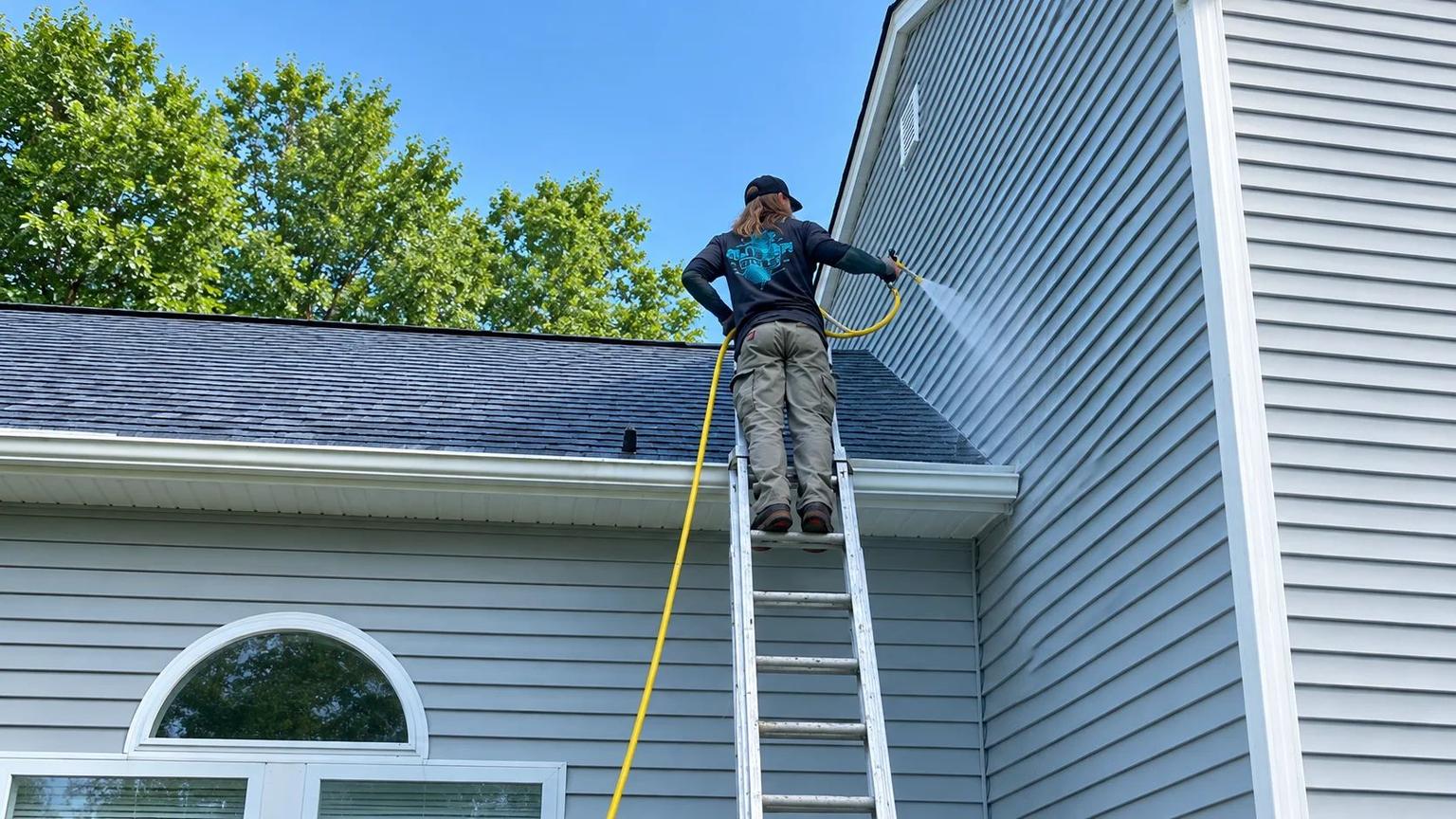
Yes - if your siding has algae, mildew, black streaks, or heavy grime, professional house washing is often worth the cost. For many North Jersey homes, a pro wash costs about $425 to $900+, but it can lower the risk of siding damage, clean more safely than DIY pressure washing, and keep surfaces clean for 12 to 24 months.
Here’s the short answer for your home:
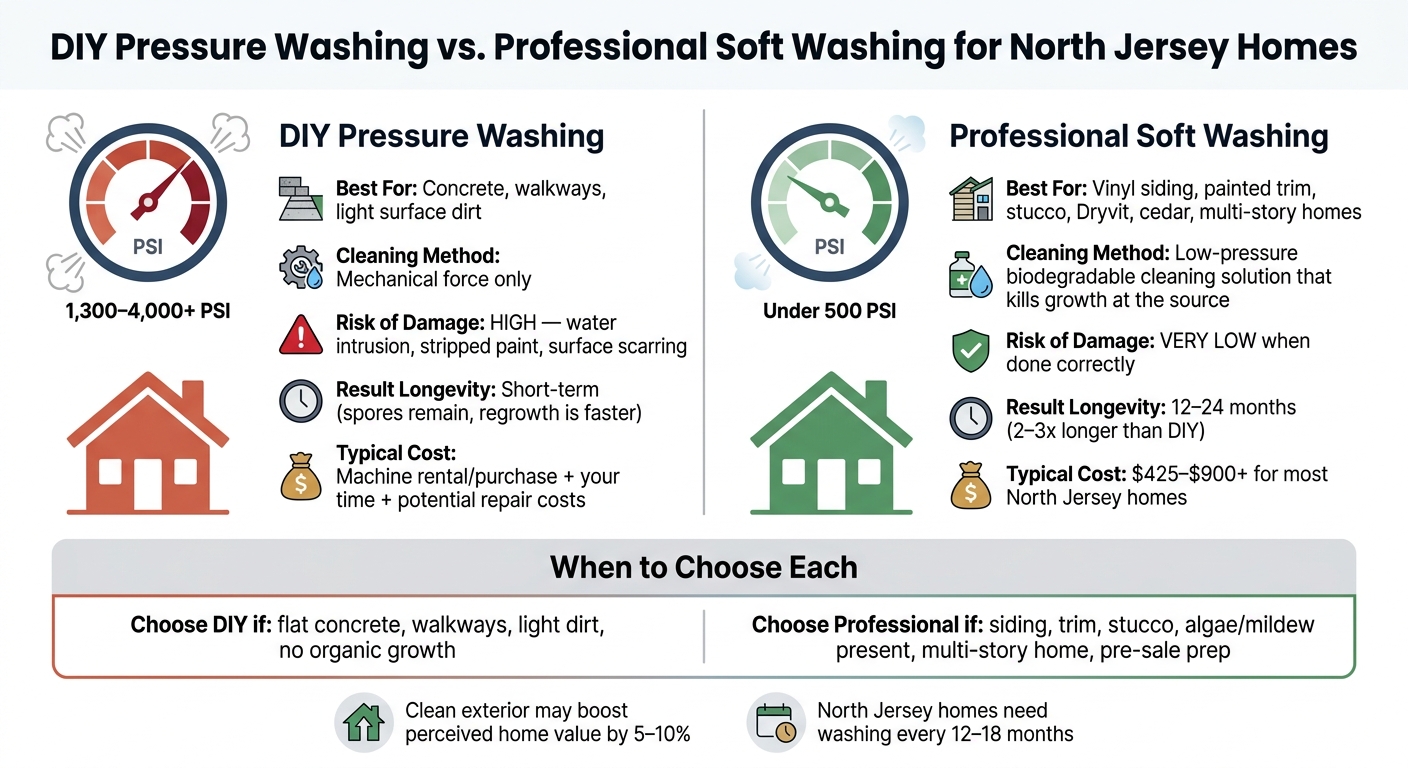
DIY Pressure Washing vs. Professional Soft Washing: North Jersey Home Exterior Guide
| Option | Best For | Main Risk | How Long Results Tend to Last | Typical Cost |
|---|---|---|---|---|
| DIY pressure washing vs. professional soft washing | Concrete, walkways, light surface dirt | Water intrusion, paint damage, surface scarring | Shorter-term | Machine rental or purchase + your time + any repairs |
| Professional soft washing | Siding, trim, stucco, Dryvit, painted wood, taller homes | Low when done right | 12–24 months | $425 to $900+ |
If your home has shaded walls, tree cover, or visible green and black staining, the choice usually comes down to this: pay less up front and take on more risk, or pay more now for lower risk and longer-lasting results. The rest of the article breaks that down in plain terms.
North Jersey homes get dirty fast. Shade, pollen, tree cover, and winter salt all help algae, mildew, and stains build up on siding, trim, soffits, and painted surfaces. That’s why house washing isn’t just about looks. It’s a repeat maintenance job.
Here’s what tends to show up first, and why it keeps coming back.
The main culprit is algae. On properties with mature trees and heavy shade, green patches can start showing on lower siding courses in as little as 12 to 18 months. The reason is pretty simple: shade holds moisture on the surface, and that gives organic growth room to spread.
North-facing walls usually take the hit first. They get the least direct sun, so they stay damp longer. That’s often where mold and mildew appear before anywhere else. If you notice a chalky film on painted siding, that points to oxidation and surface wear.
Spring pollen adds another mess. In just one season, it can leave a thick yellow layer on soffits, window ledges, trim, and deck rails. If it sits through summer heat, it can bake onto the surface and get tougher to remove. Homes near busy roads or driveways also pick up road film and salt splashback in winter, which can make spring pollen cling even more easily.
Another issue that shows up a lot is dark vertical streaking on siding and gutter faces. This usually comes from gutter overflow. When gutters clog or spill over, they send dirt and organic residue down the outside wall.
For most North Jersey homes, once every 12 to 18 months is a good schedule to help limit staining and surface wear. Some homes need it more often.
| Property Condition | Recommended Frequency |
|---|---|
| Heavy tree cover or overhanging limbs | Every 12 months |
| North- or east-facing walls with limited sun | Every 12 months |
| Near a busy road or driveway | Every 12 months |
| Open lot with good airflow and full sun | Every 12–18 months |
The best time to schedule a wash is early spring. That gives you a chance to remove winter salt and heavy pollen before they bond to the surface. Wait too far into summer, and the grime has more time to set, which makes cleaning tougher.
That timing is exactly why the DIY-versus-professional choice is worth a close look.
Renting or buying a pressure washer looks cheaper at first. But for most North Jersey homeowners, that price gap gets a lot smaller once you factor in damage risk and the chance you’ll need to do the job again sooner than planned. The bigger problem is simple: a bad DIY wash can cost more to fix than a professional wash costs in the first place.
Consumer pressure washers can reach 1,300 to 4,000+ PSI. That level of pressure may be fine for concrete, but it’s often too harsh for vinyl siding, painted trim, stucco, or wood. On shaded, tree-lined homes in Morris, Sussex, Warren, Hunterdon, and Somerset counties, using the wrong PSI can cause more damage than the dirt ever did.
The biggest risk is water intrusion. High pressure can push water behind siding panels, into wall cavities, or behind stucco and EIFS coatings. Once water gets trapped there, it can lead to hidden rot and mold growth.
Stucco and Dryvit (EIFS) are especially at risk because high pressure can damage the surface or force water behind the coating. Wood siding and cedar shakes can fuzz up or splinter. Painted trim can get stripped or chipped.
The real cost of DIY isn’t just the machine rental or purchase. It’s also the hours the job takes and the repairs that can follow.
Cracked vinyl panels, blown window seals, and water-damaged wall cavities can turn a simple wash into an expensive headache. In some cases, the repair bill ends up higher than the cost of hiring a professional from the start.
DIY pressure washing also tends to remove only surface dirt. It often doesn’t kill the growth underneath, which means algae, mildew, pollen, and road film can stick around. So the house may look cleaner for a bit, but algae and mildew often come back sooner. That’s why understanding the difference between soft wash vs. pressure wash is key, as soft washing is usually the safer option and tends to last longer.
Soft washing cleans North Jersey exteriors without the damage risk that comes with high-pressure washing. Pressure washing depends on force to blast dirt off a surface. Soft washing takes a different route: low pressure, usually under 500 PSI, plus biodegradable cleaning solutions that kill organic growth at the source.
That difference matters most on the kinds of surfaces you see all over North Jersey, like siding, trim, and painted exteriors.
When you hit siding with a pressure washer, you usually remove what you can see: algae, mildew, and grime sitting on the surface. The problem is that the spores often stay behind. So the mess comes back fast.
Soft washing deals with that root issue. The cleaning solutions neutralize the spores, which is why soft-washed surfaces usually stay clean 2 to 3 times longer than surfaces cleaned with high pressure alone.
That longer-lasting result can stretch the time between service visits. It also helps protect the material you're cleaning. Stucco, Dryvit, cedar shakes, painted wood, and vinyl siding can all be washed without the same risk of etching, stripped paint, or water getting behind panels.
In some cases, paying for professional soft washing makes the choice pretty simple.
If your home has green algae on north-facing walls, black streaks near the roofline, or mildew building up around windows and trim, you're not just looking at surface dirt. That's active organic growth, and water pressure by itself usually won't solve it. It needs chemical treatment to neutralize the growth and help stop fast regrowth.
The same goes for homes with stucco, Dryvit, or older painted wood siding. These materials don't handle high pressure well, and one mistake can lead to surface damage or moisture slipping in where you can't see it. On multi-story homes, there's also the height issue. Pros can clean upper levels without putting you on a ladder, which cuts down the safety risk.
Pre-listing prep is another time when the math can work in your favor. A clean exterior helps curb appeal in listing photos and can lift a home's perceived value by 5% to 10%. For homeowners in Morris, Sussex, Warren, Hunterdon, or Somerset counties getting ready to sell, that's a strong reason to look at professional house washing instead of doing the job over and over yourself.
Here's the practical difference for homeowners.
| Feature | DIY Pressure Washing | Professional Soft Washing |
|---|---|---|
| Pressure Level | High (1,300–4,000+ PSI) | Low (under 500 PSI) |
| Cleaning Method | Mechanical force | Low-pressure cleaning solution that kills growth |
| Risk of Damage | High - etching, water intrusion, stripped paint | Very low |
| Result Longevity | Short-term (spores remain) | 12–24 months (2–3x longer) |
Once you know soft washing is the safer option, the next step is simple: is it worth the money?
In New Jersey, most professional house washing jobs cost $425 to $900+, based on square footage, number of stories, siding type, buildup, and how easy the home is to access. A smaller ranch-style home often starts around $400. An average two-story home usually falls between $499 and $650. Larger or estate-sized homes often go past $650.
The condition of the exterior matters too. Homes with heavier algae or mildew, especially in shady spots, usually land near the top of the range. Some materials can also change the quote. Stucco, Dryvit, and cedar shakes need more careful treatment than standard vinyl siding, so the price can go up.
For North Jersey homeowners, the total value isn't just about the base price. Local service area, travel coverage, and bundled upkeep can all shape the final number. Pairing house washing with gutter cleaning or roof cleaning can lower the per-visit cost, and some companies give discounts when you book two or more services together.
Gutter Boys is a North Jersey exterior cleaning company that serves Morris, Sussex, Warren, Hunterdon, and Somerset counties. Their services include house washing, roof cleaning, gutter cleaning, and patio and deck cleaning.
They also offer free estimates and a satisfaction guarantee, which helps you see the scope of the job and the price before you book.
Professional house washing isn't always needed. But for many North Jersey homeowners, it offers better value over time.
North Jersey's humid summers, heavy pollen, and dense tree cover create the kind of conditions where organic buildup shows up fast, especially on north-facing walls and shaded siding. That grime doesn't just look bad. Left alone, it can stick around and get harder to remove.
DIY pressure washing can make sense for concrete driveways and walkways. On siding, trim, and painted surfaces, though, the risk is much higher. It's easy to force water behind panels, strip paint, or scar softer materials, and those repair costs can wipe out any money you hoped to save. For siding, trim, and painted exteriors, the safer route usually gives you better long-term value.
At that point, it comes down to your home's condition and how soon you need the work done. If you can see algae, mildew, or years of grime, or you're getting ready to list the property, bringing in a pro is often the smarter move. If you're only dealing with a flat concrete surface and plain dirt, a DIY job may be enough.
Soft washing is generally safe for plants and landscaping when trained professionals handle it the right way. In most cases, they pre-wet vegetation, cover sensitive plants, and control runoff to help prevent damage.
That matters because soft washing uses detergents. When crews take these protective steps and use biodegradable detergents, they can clean your home’s exterior without harming your garden. But there’s a catch: poor plant protection can still lead to damage.
For an average home, professional house washing usually takes 1 to 4 hours.
Pressure washing is often the faster option, usually taking 1 to 3 hours. Soft washing tends to take a bit longer at 2 to 4 hours.
What changes the timing? It usually comes down to a few things: your home’s size, how much dirt and grime has built up, and the type of materials being cleaned.
Yes. Before painting, a professional soft wash removes mildew, dust, and chalking so the new paint sticks better.
If you're getting ready to sell, a clean exterior can make a big first impression. It helps the home look move-in ready and can reduce the appearance of deferred maintenance.
For siding and painted surfaces, soft washing is the safer choice. It helps avoid water intrusion, paint stripping, and surface scarring.

.png)