


September 27, 2026
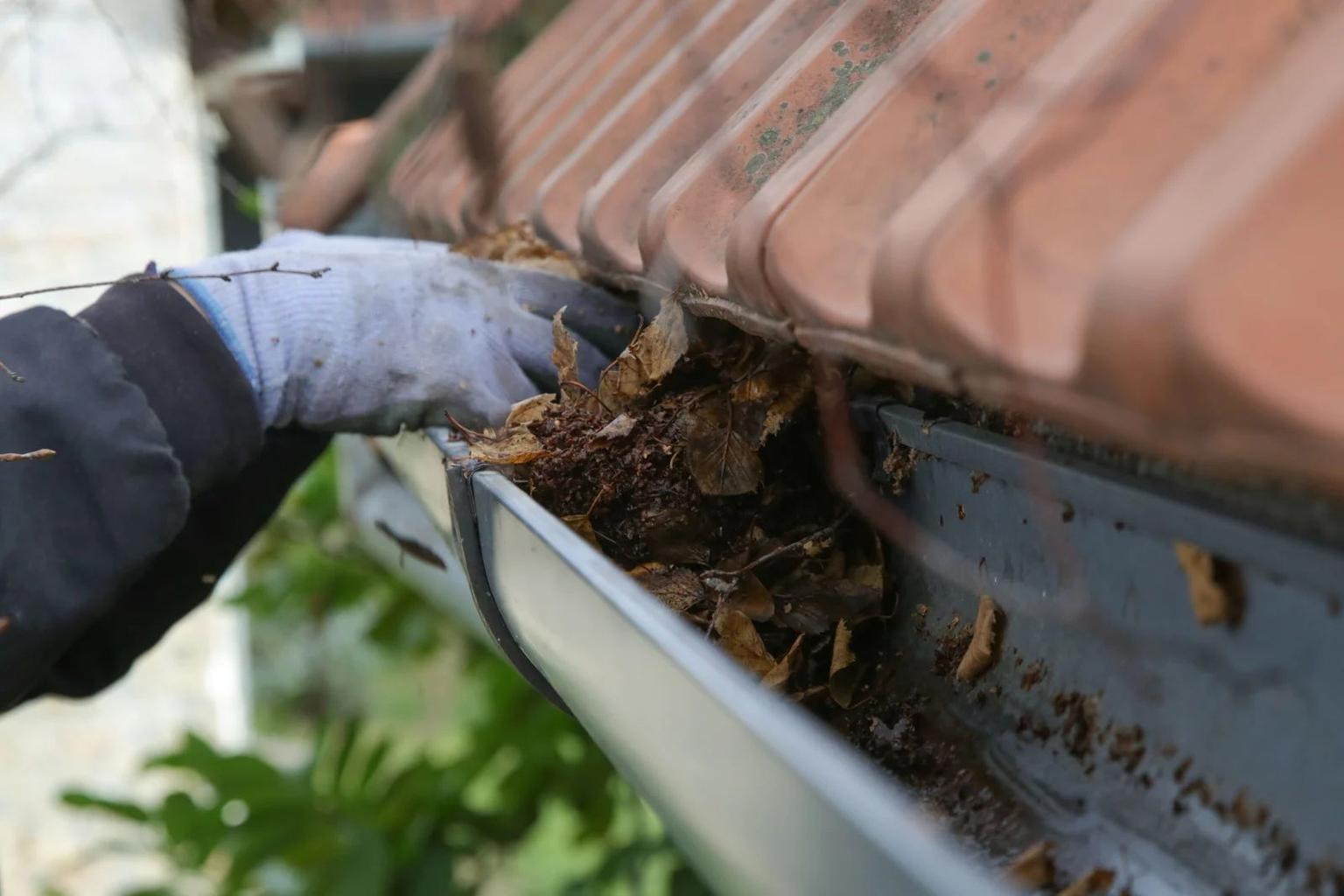
No - pressure washing the inside of your gutters before winter is a bad idea. In North Jersey, high-pressure spray can pack leaves into the downspout, strip seam sealant, dent aluminum, and push water under shingles right before freezing weather sets in.
Your safer option is simple: use professional gutter cleaning to remove debris by hand, then flush with a garden hose at low pressure. That gives you a clear way to check drainage, spot loose hangers or soft fascia, and lower the chance of ice forming in the gutter system when temperatures drop below 32°F.
Here’s the short version:
Quick Comparison
| Method | How it works | Main risk | Best use before winter |
|---|---|---|---|
| Pressure washing | Blasts debris with high PSI | Clogs, seam damage, water forced under roof edges | Avoid for inside gutters |
| Hand cleaning + hose flush | Scoop debris, then rinse lightly | Low if done with care | Best choice |
| Pro service | Cleaning, flow test, drain check | Service cost, often $150–$350 for many 1–2 story NJ homes | Best for hard-to-reach or problem systems |
If your goal is to keep water moving before a North Jersey freeze, this article points to the low-pressure route - not the pressure washer.
Pressure Washing vs. Hand Cleaning Gutters Before Winter: North Jersey Guide
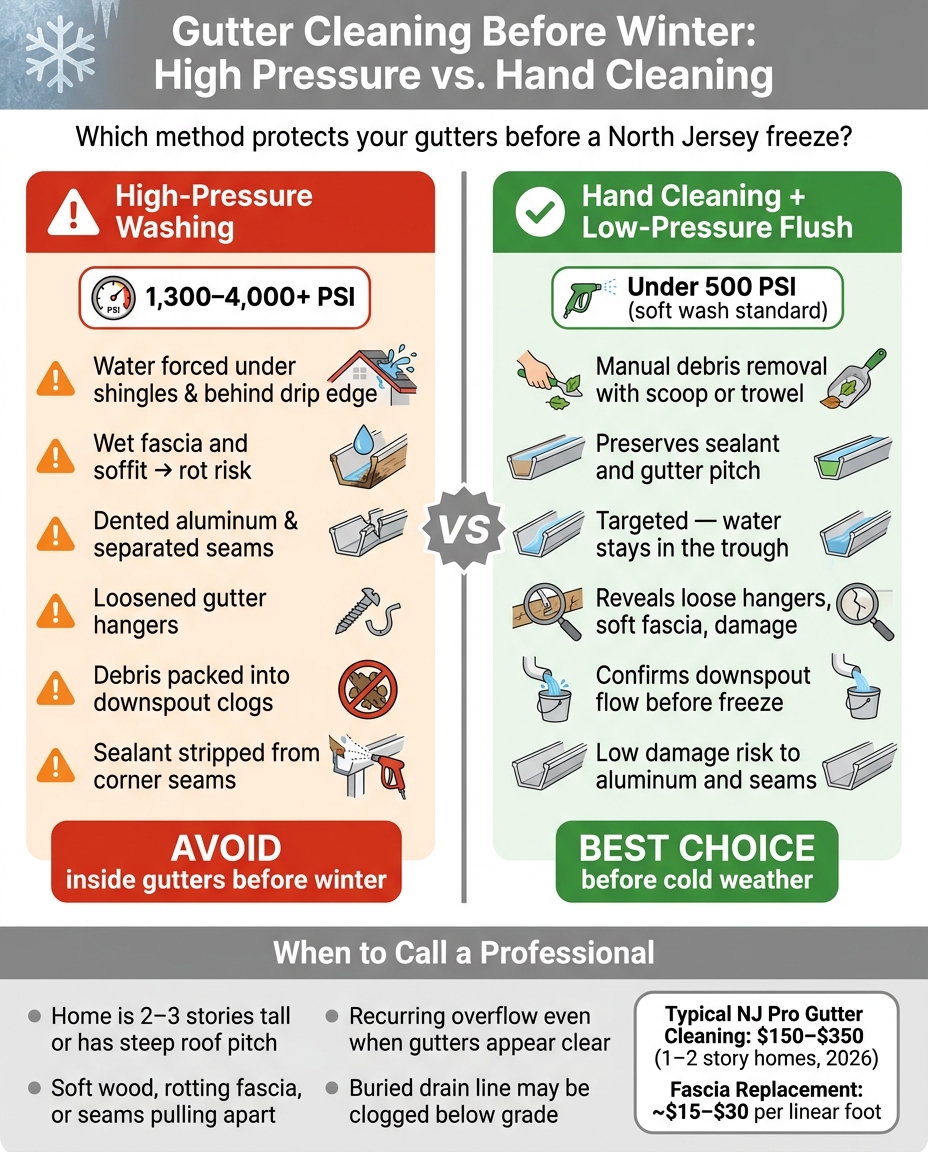
A high-pressure spray inside a gutter can send water under shingles, behind the drip edge, and into seams. Inside the gutter trough, high-pressure spray - usually 1,300 to 4,000+ PSI - doesn't just shove debris forward. It can bounce off the trough and a layer of wet leaves, sending water into places it should never reach.
That pressure can also jam debris into the outlet, strip sealant from corner seams, and turn a clog into a tighter, harder mess. This section looks at the gutter channel and downspouts only.
A lot of pressure-washing damage stays out of sight at first. You often don’t notice it until a leak shows up or wood starts to rot. Here’s what can happen:
That’s why the safer move is to start by removing debris by hand.
PWNA standards treat under 500 PSI as pressure washing vs. soft washing, which helps protect parts like shingles, aluminum seams, and window seals. The same idea applies inside a gutter. The inside of a gutter system is not a surface that gains anything from high-pressure cleaning.
The table below compares both methods based on the issues that matter most for North Jersey homes going into winter.
| Feature | High-Pressure Washing | Hand Cleaning & Low-Pressure Flush |
|---|---|---|
| Cleaning method | Mechanical blast | Manual removal + low-pressure flush |
| Damage risk | High: can dent aluminum, strip sealant, and open seams | Low: preserves sealant and gutter pitch |
| Control around roof edges | Poor: spray can deflect under shingles and behind the drip edge | High: targeted debris removal, water stays in the trough |
| Ability to inspect seams and fascia | Low: debris can be smeared or compacted, hiding defects | High: hands-on check of hangers and sealant |
| Suitability before winter | Risky: can force water into seams and roof edges that will freeze | Ideal: helps ensure clear drainage before cold weather |
| When to stop | Stop if spray reaches seams or the roof line | Stop once water runs full and clean from the downspout |
Hand cleaning followed by a low-pressure flush keeps the system open without putting extra stress on seams or roof edges. If you still plan to use a pressure washer, the next step is keeping the pressure low and staying in control.
If you're cleaning gutters before a North Jersey freeze, start with the safest option. Use a simple two-step method: remove debris by hand, then flush the gutter with low pressure to make sure water drains before freezing weather sets in.
Put on work gloves and use a gutter scoop or small trowel to pull out leaves, packed debris, and compacted material. Start at the downspout and work away from it. Keep a bucket on the ladder so you can drop debris in as you go instead of scattering it across the yard or into storm drains.
This part does more than clear the gutter. It can also show you trouble spots before winter makes them worse. Hand removal reveals loose hangers, soft fascia, and shingle granules that may signal roof-edge damage.
After the trough is clear, run a garden hose along the channel. Keep the water parallel to the roofline, not pointed at the shingles. If water flows strongly from the outlet, the downspout is clear. If you only see a trickle, the downspout is still blocked, and the clog is often stuck in an elbow.
If that happens, don't turn up the pressure. Open the elbow and clear the plug by hand. More pressure can pack the clog even tighter.
Check that water drains away from the house and doesn't sit in the gutter system. If the gutter still won't drain, stop there and switch to a controlled pressure-washing setup or hire professional gutter services.
If you still need a pressure washer, keep the pressure low and the wand controlled.
If you still use a pressure washer, keep it under control. The goal is simple: clear out debris without driving water under the roof edge or leaving water behind that can freeze. Even after hand cleaning, go slow and keep the spray inside the gutter trough only.
Set the ladder on firm, level ground before you climb. Follow the 4:1 rule: for every 4 feet of height, place the base 1 foot out from the wall. Both rails should make solid contact, and you should never lean to the side to get a little more reach. That’s how ladders tip.
Move the ladder instead of stretching. It takes more time, sure, but it beats losing your balance. If you can, use a telescopic wand from the ground.
Once the ladder is steady, think control, not force. Aim the wand into the gutter trough only. Start with the lowest PSI that clears the clog. Use a 30° nozzle, and keep the spray running parallel to the gutter channel toward the downspout.
Stop right away if you notice soft fascia, spinning hanger screws, cracked seams, loose guards, or sagging gutters. More pressure won’t fix a structural issue. It’ll make it worse. And if the debris is packed in hard, don’t keep blasting at it. Stop and clear it by hand.
If hand cleaning and low-pressure flushing still don't solve the issue, it's time for a pro inspection. At that point, you're likely dealing with more than packed leaves and muck.
A professional call makes sense right away if your home is two or three stories tall, has a steep roof pitch, or includes spots that are tough to reach. In those cases, the ladder risk alone is enough reason to stay off the roof. The same applies if you spot soft wood, moisture along the fascia, seams pulling apart, or a downspout that still drains poorly after the gutter trough has been cleared. Those signs usually point to damage or a deeper blockage, not something more water pressure will solve.
Recurring overflow is another big red flag. If water pours over the sides every time it rains even though the gutters look clear from above, the gutter run may have lost its pitch. Or the buried drain line may be clogged below grade. A PWNA-trained professional, the same trade affiliation Gutter Boys holds, can flush and flow-test the full system, including underground drainage, to pinpoint where the blockage is. That's when a pro should inspect the pitch, elbows, and buried drain lines.
For most 1–2 story homes in New Jersey, standard gutter cleaning costs $150–$350 in 2026. Fascia replacement usually runs about $15–$30 per linear foot. It's smart to schedule service after the final leaf drop and before freezing weather hits. That timing gives your system a better shot at making it through winter without frozen debris or standing water expanding inside the downspouts.
Yes, but don’t use a pressure washer on the outside of gutters as your main cleaning method. High pressure can strip the finish and push water into the fascia or gutter seams.
For the outside face, use an exterior cleaning method that fits the surface. For gutter cleaning, clear out debris by hand first. Then flush the gutter with controlled, low pressure and check that water flows the way it should.
Check it during a hard rain or flush it with a hose. Water should come out fast and clean at the bottom.
If it doesn’t - if it spills over the gutter edge, sloshes around, backs up, or only trickles out - the downspout is still clogged.
In North Jersey, the best time is usually the second half of November. By then, most leaves have fallen, but you’re still ahead of a long freeze.
Clean too early in October, and there’s a good chance the gutters will fill right back up. Wait too long, though, and the debris gets harder to remove. At that point, you also run a higher risk of damage.
If you’re doing the job yourself, be careful:
That simple timing window can make the job a lot easier and a lot safer.

.png)